
Journal of Advanced Biological Sciences
ISSN Print: N/A
ISSN Online: 3134-8823
About: Journal of Advanced Biological Sciences (JABS) is a peer-reviewed, open-access journal that aims to publish cutting-edge research and advancements in all areas of biological sciences. The journal serves as a platform for researchers, academicians, and professionals to contribute their scientific knowledge and foster innovation in biology-related fields.
Publisher Responsibility
Lumina Quest Publishing is responsible for providing the journal with the necessary publishing infrastructure, editorial support, production services, digital preservation, and dissemination of published content. The publisher supports transparent and ethical publishing practices and ensures that the journal’s publishing operations are conducted in accordance with applicable scholarly publishing standards.
The publisher is also responsible for maintaining the journal’s website, publication systems, archiving arrangements, and administrative support while respecting the independence of editorial decision-making.
Editorial Responsibility
The Editor-in-Chief and Editorial Board are responsible for maintaining the academic and scientific quality of the journal. The editorial team oversees the evaluation of submitted manuscripts, selection and coordination of peer reviewers, editorial assessment and decisions, and adherence to the journal’s scope and ethical standards.
Editorial decisions are made independently on the basis of academic quality, originality, methodological soundness, relevance, and ethical compliance, without inappropriate influence from the publisher, authors, reviewers, or commercial interests.
Editorial Independence
The editorial team maintains editorial independence in all decisions concerning manuscript evaluation, peer review, acceptance, revision, and rejection. The publisher does not interfere with the academic judgment of editors or reviewers.
Journal of Advanced Biological Sciences | Year 2024 | Volume 1 | Issue 2 | Pages 1-6
Modulatory Effects of Spirulina Platensis and Silver Nanoparticles on Lipid Profile and Liver Enzymes in Normal and Hyperlipidemic Rats
Saad Dhamin Oleiwi 1* and M. Karkaz Thalij21,2College of Agriculture, Tikrit University, Tikrit, Iraq
View PDF Download XML Download DOI XML DOI: 10.66590/jabs2024010201
Abstract
Background: Natural bioactive compounds and nanomaterials are increasingly explored for their potential in managing metabolic disorders. This study investigated the effects of Spirulina platensis and silver nanoparticles (AgNPs) on lipid metabolism and liver enzyme activity in healthy and hyperlipidemic rats. Methods: The experiment was conducted between September and November 2021 at Tikrit University. Rats were divided into normal and hyperlipidemic groups and treated orally with Spirulina platensis (150 mg/ml), AgNPs (10 mg/ml), or their combination. Lipid profile parameters, including triglycerides, total cholesterol, Low-Density Lipoprotein (LDL), very Low-Density Lipoprotein (vLDL) and High-Density Lipoprotein (HDL), were assessed alongside liver enzymes AST, ALT and ALP. Results: Hyperlipidemia significantly disrupted lipid and hepatic parameters. In healthy rats, administration of AgNPs, Spirulina and their combination significantly reduced triglyceride levels compared to controls. In hyperlipidemic rats, these treatments markedly lowered triglycerides and total cholesterol relative to untreated diseased controls. Additionally, treated groups exhibited decreased LDL and vLDL levels, alongside increased HDL concentrations. Liver enzyme activities (AST, ALT, ALP) were significantly reduced in both treated healthy and hyperlipidemic groups, indicating improved hepatic function. The combined treatment generally produced the most pronounced beneficial effects. Conclusion: Oral administration of Spirulina platensis and silver nanoparticles, individually and synergistically, improves lipid profiles and liver enzyme status in both normal and hyperlipidemic conditions, highlighting their potential therapeutic value in managing hyperlipidemia.
INTRODUCTION
Atherosclerosis is a serious disease that affects humans as it is the primary responsible for heart disease, as it is described as a chronic arterial disease resulting from a dysfunction in the lining of blood vessels accompanied by thickening of the walls of the arteries and narrowing of their lumen [1]. This disease occurs as a result of the deposition of fats, especially cholesterol, on the walls of the arteries, resulting in a loss of elasticity through a cumulative mechanism that may last between 20-30 years [2]. Atherosclerosis cases were observed at ages that started from newborns and increased with advancing age, with high statistics indicating that cardiovascular diseases are the main cause of most deaths worldwide [3].
The consumption of food with a high content of fat and calories, in addition to the inflammation that affects the body’s tissues and organs, which gives the opportunity for the flow of cholesterol to the places of infection, is considered the main cause of atherosclerosis cases and the negative impact on the heart muscle and thus the possibility of deaths [4].
Although there are many drugs that have an anti-hyperlipidemic effect, they are not without negative side effects in the health of the body and its efficacy, so the research directions are to try to find the safest substances to get rid of high blood fats and the damage resulting from them to reach the maintenance of The health status of the human being and comes in the forefront of these materials are Spirulina algae and silver nanoparticles (AgNPs).
Spirulina is one of the most important Cyanobacteria species from the nutritional, medical and industrial point of view, as it contains many active elements and compounds that come in the forefront of protein at 70%, fats, carbohydrates, minerals, vitamins, sterols and other rare substances, making Spirulina the most important and prominent food in nature and it has been called Super Food [5,6]. Accordingly, Spirulina is considered a complementary treatment for many diseases, the most prominent of which is in reducing lipids and sugar in the blood and controlling the level of blood pressure [7], through its possession of many therapeutic mechanisms that include increasing the activity of antioxidant enzymes such as Glutathione peroxidase and Catalase. In addition to the effectiveness of its compounds in inhibiting the activity of the enzyme lipolytic lipase, which reduces the absorption of fats in the intestines [8].
Nanoscience or the science of fine particles with sizes between 1-100 nanometers is one of the most important modern technologies that are characterized by having unique properties different from the raw materials manufactured from them [9]. One of the most prominent nanoparticles used globally is silver nanoparticles that have been used in various therapeutic aspects, most notably its high inhibitory ability against microbial cells and the inhibition of cancer cells and in the treatment of many diseases, especially reducing blood fats by having a mechanism to inhibit the enzymes responsible for fat absorption in Intestines [10], has also been used in many commercial and medical products [11].
From the foregoing and due to the high incidence of heart diseases and atherosclerosis in the entire community, the aim of the study was to try to clarify the effectiveness of Spirulina or AgNPs in improving the vital parameters of blood lipids and liver enzymes related to the health of healthy male laboratory rats with experimental hyperlipidemia.
Materials and Methods
The study was conducted in the animal house - College of Veterinary Medicine - Tikrit University and used in the study 40 male white laboratory rats of age 8 weeks and weight 230-245 g, divided into eight groups and placed in separate cages. High fat for four weeks, while the uninfected groups were fed a standard diet. Animals were given S. platensis at a concentration of 150 mg/ml and AgNPs at a concentration of 10 mg/ml.
The experimental animals were randomly distributed into eight groups and each group had its own food, as follows:
- The First Group (Control T0): The group of rats fed a standard diet
- The Second Group (T1 Positive Control): The group of rats fed the standard ration and the dose at a concentration of 10 mg/ml of AgNPs
- The Third Group (T2 Positive Control): The group of rats fed the standard ration and dosed with a concentration of 150 mg/ml of Spirulina
- Fourth Group (T3 Positive Control): The group of rats fed the standard ration and dosed with a concentration of 10 mg/ml of AgNPs + 150 mg/ml of Spirulina
- The Fifth Group (T4 Injury Group): The group of rats fed a high-fat diet and hyperlipidemia, which were left untreated
- The Sixth Group (T5 Treatment): The group of hyperlipidemic rats dosed with a concentration of 10 mg/ml of AgNPs
- Group VII (T6 Treatment): The group of hyperlipidemic rats dosed with 150 mg/ml of Spirulina
- The Eighth Group (T7 Treatment): The group of hyperlipidemic rats dosed with a concentration of 10 mg/ml AgNPs + 150 mg/ml Spirulina
Measured Standards
After the end of the study period, blood is drawn from the animals for the purpose of conducting the following biochemical tests.
Determination of Total Cholesterol Concentration in Blood Serum
Basic Principle: The cholesterol oxidase enzyme works on the oxidation of cholesterol in the presence of the enzyme peroxidase and in the presence of a hydrogen donor. The colorless substrate is oxidized to the pink dye quinonemine, according to the following equations:
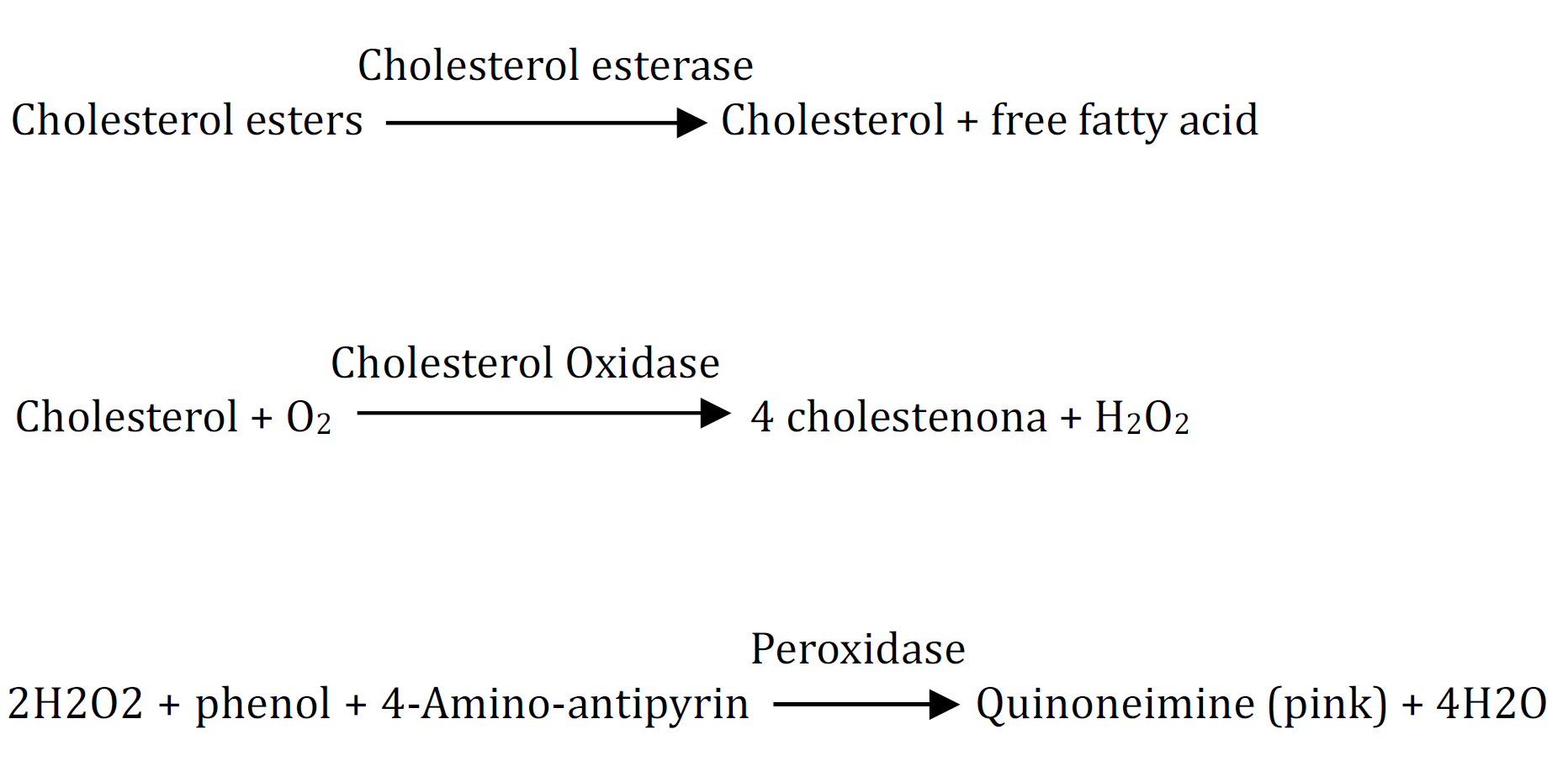
The intensity of the carmine-red color of the resulting complex was measured using a spectrophotometer at a wavelength of 500 nm. The total cholesterol concentration is calculated according to the following equation:

A: Absorbance
Standard Concentration = 200 mg/dl
Determination of Triglycerides Concentration in blood serum
The estimation of the level of triglycerides in the blood serum is carried out using a ready-made test kit (kit) manufactured by the French company Biolabo, based on the method [12].
Basic Principle
This method is based on enzymatic analysis of triglycerides into free fatty acids and glycerol, which passes through a series of reactions to produce a pink complex according to the following equations:
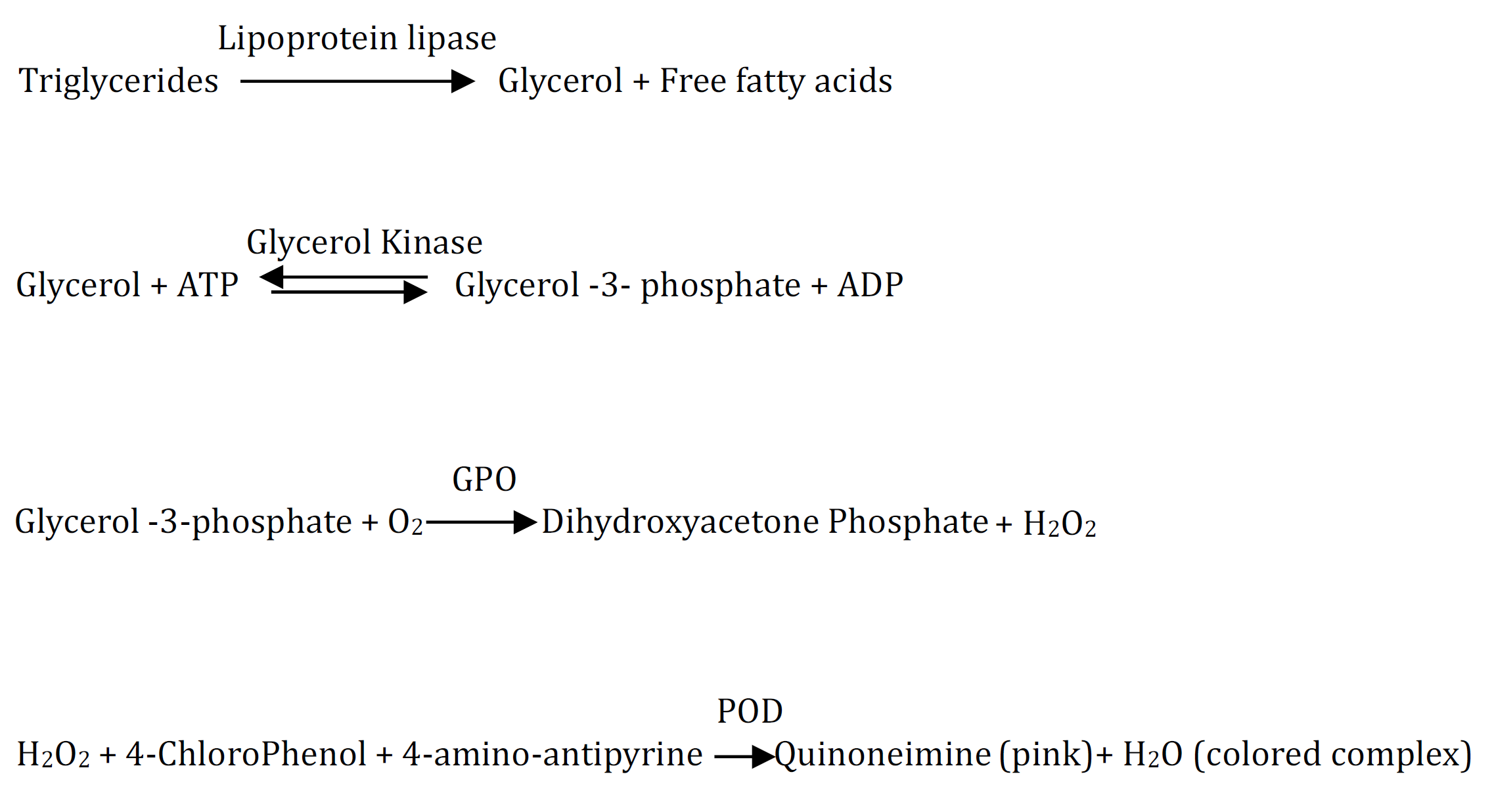
The color intensity of the complex resulting from the reaction is read by a spectrophotometer at a wavelength of 500 nm and the concentration of triglycerides is calculated as shown in the following equation:

As, A: Absorbance
Standard concentration = 200 mg/dL
Determination of high Density Lipoprotein-Cholesterol Concentration (HDL-C) in Blood Serum
Basic Principle: The concentration of HDL-C in serum was estimated using a ready-made analysis kit from the French company Biolabo based on the enzymatic method that includes precipitation of LDL-C, VLDL-C and chylomicrons by adding phosphotinextic acid in the presence of magnesium ions, as the filtrate obtained after the separation process using centrifugation contains only HDL-C, to be estimated using the enzyme solution of cholesterol [13].
Procedure
A test tube was prepared and 50 μl of blood serum and 50 μl of precipitate were added, then mixed well and left at laboratory temperature for 10 minutes. Then the mixture was placed in a centrifuge for 15 minutes at a speed of 4000 rpm and the supernatant was separated from the precipitate. Three test tubes were taken and 25 µL of Planck's solution, 25 µL of the standard solution and 25 µL of the sample were added, mixed well and left for 5 minutes in a water bath at a temperature of 37° C. Then the absorbance of the three tubes was read at a wavelength of 500 nm.
Calculation of Very Low Density Lipoprotein-Cholesterol Concentration (VLDL–C) in Blood Serum
The concentration of (VLDL-C) in the blood serum was calculated based on the equation proposed by Burtis and Ashwood [14].
Calculation of low Density Lipoprotein-Cholesterol Concentration (LDL-C) in Blood Serum
The LDL-C concentration in serum was calculated based on the following relationship [14].
LDL-C concentration (mg/100ml) = (HDL-C + VLDL-C) - total cholesterol
Determination of the Activity of Aspartate Amino Transaminase (AST) in Serum
The activity of the enzyme Aspartate Aminotransferase was estimated using the British Randox type analysis kits as stated in [15].
Determination of the Activity of Alanine Amino Transaminase (ALT) Enzyme in Blood Serum
This method is based on measuring the Pyruvate hydrazone formed by the reaction of Pyruvate resulting from the transamination process in the presence of the enzyme Alanine Aminotransferase with 2,4-Di-Nitrophenyl hydrazene and reading the absorbance on a spectrophotometer at a wavelength of 546 nm [15].
Estimation of the Activity of the Enzyme Alkaline Phosphatase (ALK) in the Blood Serum
The ready-made analysis kit manufactured by the British company RANDO was used to estimate the activity of the enzyme alkaline phosphatase (ALK) in the blood serum, based on the colorimetric method used by [15]. As the ALK enzyme works to decompose the basic substance Phenyl Phosphate into phosphate and phenol in the basal environment. The activity of the ALK enzyme was calculated as (IU/L).
Results and Discussion
Effect on Blood Lipid Profile Parameters: Determining the parameters of the blood lipid profile is of great importance in identifying the health status of the organism, as it clearly indicates the metabolic state between the components of fat and nutrients and their impact on the health of the body. Table 1 shows the effect of oral dosing of AgNPs and Spirulina on the blood lipid profile of hyperlipidemia animals. The results showed that the case of oral administration of both AgNPs and Spirulina caused a significant decrease in the level of Triglycerides (TG), Cholesterol (TC) and LDL cholesterol compared to their value in the infection group. The highest significant value (p<0.05) recorded for both TG and TC and LDL was in the group of infected animals fed a high-fat diet, which amounted to 357, 243, 145 mg/dl, respectively. Determining the parameters of the blood lipid profile is of great importance in identifying the health status of the organism because it clearly indicates the metabolic state between The components of fat and nutrients and their impact on the health of the body. Table 1,2 shows the effect of oral dosing of AgNPs and Spirulina on the blood lipid profile of hyperlipidemia animals. The results showed that the case of oral administration of both AgNPs and Spirulina caused a significant decrease in the level of Triglycerides (TG), cholesterol TC and LDL cholesterol compared to their value in the infection group. The highest significant value (p<0.05) recorded for both TG and TC and LDL was in the group of infected animals fed a high fat diet, which reached 357, 243 and 145 mg/dl, respectively. The effect of oral administration on the parameters of TG, TC and LDL in healthy animals had caused the significant decrease in the above criteria and their values in the case of oral administration of AgNPs (T1) were at 106, 95, 35.2 mg/dl, respectively and in the case of administration Oral Spirulina (T2) had its value at 104, 91, 26.9 mg/dl and when given both (T3), its values were at 98, 90, 9.1 mg/dl, respectively, compared with its value in the control group (T0), which were at 151, 97, 34.5 mg/dl, respectively and the same situation was in the case of Very Low Density Lipoprotein (vLDL) compared to the control group.
In the case of animals suffering from experimental hyperlipidemia, these values started with a significant decrease and approached the normal level when dosed with AgNPs (T5) particles and were at 188, 143 and 69.3 mg/dl, respectively and in the case of oral administration of Spirulina (T6) it became at 173, 123, 47.4 mg/dl, respectively and when administered orally of their mixture (T7), their values were at 165, 117, 31.4 mg/dl, respectively, compared with their standards in the injury group (T4), which were at 357.243, 145 mg/dl, respectively.
Table 1: Effect of Oral Administration of Spirulina and AgNPs on Blood Lipid Profile (mg/dl)
|
Transactions |
TG mg/dl |
TC mg/dl |
LDL mg/dl |
HDL mg/dl |
vLDL mg/dl |
|
T0 |
151e±5.01 |
97e±8.02 |
34.5d±1.6 |
32.3e±3.84 |
30.2d±3.0 |
|
T1 |
106f±4.16 |
95e±9.02 |
35.2d±1.8 |
38.6d±2.76 |
21.2e±0.83 |
|
T2 |
104f±9.87 |
91f±6.55 |
26.9f±1.1 |
43.3c±2.38 |
20.8e±1.97 |
|
T3 |
98g±3.02 |
90f±6.53 |
9.1g±1.2 |
61.3a±7.88 |
19.6ef±1.4 |
|
T4 |
357a±8.03 |
243a±6.35 |
145a±7.7 |
26.6f±4.25 |
71.4a±2.1 |
|
T5 |
188b±8.16 |
143b±3.49 |
69.3b±7.29 |
36.1de±5.21 |
37.6b±1.63 |
|
T6 |
173c±9.64 |
123c±8.55 |
47.4c±2.9 |
41.5cd±5.71 |
34.6c±1.92 |
|
T7 |
165d±4.87 |
117d±3.26 |
31.4e±1.7 |
52.6b±3.86 |
33c±1.37 |
Different letters in the same column indicate significant differences at the probability level of 0.05 ± = standard error. Averages are for five animals
T0: Healthy Control, T1: Positive Control Given AgNPs, T2: Positive Control Given Spirulina, T3: Positive Control Given AgNPs with Spirulina, T4: Hyperlipidemia Group without Treatment, T5: Treatment Group Given AgNPs, T6: Treatment Group Given Spirulina, T7: Treated Group Given AgNPs with Spirulina
.
Table 1 shows the values of High Density Lipoprotein (HDL) in which there was a significant increase (p<0.05) in groups of T1, T2 and T3 animals, which were at 38,6, 43,3 and 61.3 mg /dl, respectively, compared to its value in the animals of the healthy control group T0, which was at 32.3 mg/dl, the case of hyperlipidemia (T4) caused a significant decrease in its value to be at 26.6 mg/dl and the case of oral administration to rats Infected with hyperlipidemia with AgNPs and Spirulina and their mixture together caused a modification of its value to be at 36.1, 41.5, 52.6 mg/dl, respectively, compared to its value in animals of the infestation group, which was at 26.6 mg/dl.
The results agreed with Li et al. [16], who found that the use of Spirulina alga in the treatment of hyperlipidemic rats led to a positive modification of the values of TC, TG, LDL and vLDL in its low, as well as in modifying the value of HDL in its height, as Li et al. [17], mentioned the role It is important for Spirulina to improve the health status of blood lipids and make it within the normal limits in mice fed foods with a high content of fats and carbohydrates, as the results agreed with Vide et al. High fat diet.
The results also agreed with Kaur and Singhal [18], who indicated lower values of TC, TG, LDL and vLDL in rats given AgNPs particles compared to the control group fed a high-fat diet and agreed with Al-Dujaili and Al-Shemeri [19]. Who found a role for silver nanoparticles in improving the health status of the blood lipid profile through a study conducted on rats fed a high-fat diet. The reason for the ability of nanoparticles to reduce blood lipids, especially cholesterol, could be due to their ability to inhibit the mechanisms responsible for cholesterol absorption in the body [10].
Table 2: Effect of Oral Administration of Spirulina and AgNPs Particles on Enzyme Parameters of Rat Liver
|
Transactions |
AST IU/L |
ALTI U/L |
ALK IU/L |
|
T0 |
7.13d±0.88 |
56.1c±2.50 |
1136d±18.69 |
|
T1 |
7.23d±0.76 |
57.6c±3.56 |
1148d±14.77 |
|
T2 |
6.83d±1.22 |
55.6c±5.23 |
1139d±15.84 |
|
T3 |
6.73d±1.01 |
54.3c±2.96 |
1143d±15.05 |
|
T4 |
14.23a±1.59 |
81.33a±4.33 |
1477a±14.97 |
|
T5 |
9.92b±1.73 |
63b±2.40 |
1292b±14.83 |
|
T6 |
8.23c±1.82 |
63b±2.32 |
1216c±15.02 |
|
T7 |
8.03c±3.18 |
61b±1.57 |
1197c±13.44 |
Different letters in the same column indicate significant differences at the probability level of 0.05 ± = standard error. Averages are for five animals.
T0: Healthy Control, T1: Positive Control Given AgNPs, T2: Positive Control Given Spirulina, T3: Positive Control Given AgNPs with Spirulina, T4: Hyperlipidemia Group without Treatment, T5: Treatment Group given AgNPs, T6: Treatment Group given Spirulina, T7: Treated Group Given AgNPs with Spirulina
.
Effect of Oral Administration of Spirulina and AgNPs on Liver Enzyme Parameters of Rats
The liver is one of the important organs of the body, as it produces many enzymes that have a vital role in catalyzing and regulating many chemical reactions, including the enzyme Aspartate Aminotransferase (AST), the enzyme that transports Alanine Aminotransferase (ALT) and the Alkaline Phosphatase (ALK), which are Estimated in animals orally administered groups of Spirulina and silver nanoparticles. The results in Table 2 showed that there was no significant difference (p<0.05) in the value of AST, ALT and ALK enzyme in the treated groups of healthy animals in AgNPs (T1) and Spirulina (T2) or both together (T3) compared with their values in The control group (T0) was at 7.13, 56.1 and 1136 IU/L, respectively.
As for the case of hyperlipidemia in laboratory rats, it caused an increase in the concentration of these enzymes in the blood serum and the case of oral administration of both AgNPs (T5) and Spirulina (T6) or both together (T7) caused a modification of the values of AST, ALT and ALK enzymes and was AST values at 9.92, 8.23 and 8.03 IU/L respectively and ALT values at 63, 63 and 61 IU/L respectively as well as ALK values at 1292, 1216 and 1197 IU/L respectively compared with their values in The injury group (T4) was 14,23, 81,33, 1477 IU/L for AST, ALT and ALK, respectively.
The results agreed with what Oriquat [20], found in the role of Spirulina in improving the health status of fatty liver enzymes in rats fed a high-fat diet. The ALT enzyme values in the affected group were at 64,4 IU/L, while it decreased in the groups dosed with Spirulina at a high concentration 100, 200 and 300 mg/kg to become at 55.8, 43.2, 37.6 IU/L respectively, while their values in AST enzyme became at 144.4, 129.7, 122.5 IU/L for the same concentrations respectively compared to the injury group in which the AST value was 168.7 IU/L.
The results also agreed with Nayyef [21], which found a role for Spirulina at a concentration of 200 mg/ml in reducing liver enzymes AST and ALT compared to the group infected with Staph. aureus and untreated and also agreed with Khalil et al. [22], who found a positive role for Spirulina in improving The health status of liver enzymes in all groups that were dosed with Spirulina at a concentration of 300 mg/kg/day and for all groups treated with furan and untreated, Li et al. [17], mentioned in a study they conducted about the importance of Spirulina in improving the health status of liver enzymes in animals fed On a high-calorie diet.
The results converged with Lee et al. [23], that the value of AST and ALT in the control group was at 133,80, 26,40 IU/L, respectively, while the group dosed with AgNPs at a concentration of 100 μg was at 111,80, 27 IU/L for the same liver enzymes respectively.
REFERENCES
- Xue, X. et al. “Hydroxysafflor yellow A, a natural compound from Carthamus tinctorius L with good effect of alleviating atherosclerosis.” Phytomedicine, vol. 91, 2021, pp. 153694.
- Chen, H. et al. “Spirulina active substance mediated gut microbes improve lipid metabolism in high-fat diet fed rats.” Journal of Functional Foods, vol. 59, 2019, pp. 215–222.
- Pesonen, E. et al. “Infection-associated intimal thickening in the coronary arteries of children.” Atherosclerosis, vol. 142, no. 2, 1999, pp. 425–429.
- Lawson, J.S. and W.K. Glenn. “Infection and food combine to cause atherosclerotic coronary heart disease—Review and hypothesis.” IJC Heart & Vasculature, vol. 35, 2021, pp. 100807.
- Suzery, M. et al. “Improvement of stability and antioxidant activities by using phycocyanin-chitosan encapsulation technique.” IOP Conference Series: Earth and Environmental Science, vol. 55, no. 1, 2017, pp. 012052.
- Lafarga, T. et al. “Spirulina for the food and functional food industries.” Food Research International, vol. 137, 2020, pp. 109356.
- Finamore, A. et al. “Antioxidant, Immunomodulating and Microbial-Modulating Activities of the Sustainable and Ecofriendly Spirulina.” Oxidative Medicine and Cellular Longevity, 2017, https://doi.org/10.1155/2017/3247528.
- Hirahashi, T. et al. “Activation of the human innate immune system by spirulina: augmentation of interferon production and NK cytotoxicity by oral administration of hot water extract of Spirulina platensis.” International Immunopharmacology, vol. 2, no. 4, 2002, pp. 423–434.
- Korkmaz, N. et al. “Biogenic nano silver: Synthesis, characterization, antibacterial, anti-biofilms and enzymatic activity.” Advanced Powder Technology, vol. 31, no. 7, 2020, pp. 2942–2950.
- Ninan, N. et al. “The impact of engineered silver nanomaterials on the immune system.” Nanomaterials, vol. 10, no. 5, 2020, pp. 967.
- Tortella, G.R. et al. “Silver nanoparticles: Toxicity in model organisms as an overview of its hazard for human health and the environment.” Journal of Hazardous Materials, vol. 390, 2020, pp. 121974.
- Fossati, P. and L. Prencipe. “Serum triglycerides determined colorimetrically with an enzyme that produces hydrogen peroxide.” Clinical Chemistry, vol. 28, no. 10, 1982, pp. 2077–2080.
- Tietz, N.W. and D.F. Shuey. “Lipase in serum—the elusive enzyme: An overview.” Clinical Chemistry, vol. 39, no. 5, 1993, pp. 746–756.
- Burtis, C.A. and E.R. Ashwood. Tietz Textbook of Clinical Chemistry. 3rd ed., W.B. Saunders Company, 1999, pp. 840–843.
- Tietz, Y. Clinical Biochemistry. 6th ed., McGraw-Hill, 2005, pp. 825.
- Li, T.T. et al. “Polyunsaturated fatty acids from microalgae Spirulina platensis modulates lipid metabolism disorders and gut microbiota in high-fat diet rats.” Food and Chemical Toxicology, vol. 131, 2019, pp. 110558.
- Li, T.T. et al. “Spirulina platensis polysaccharides attenuate lipid and carbohydrate metabolism disorder in high-sucrose and high-fat diet-fed rats in association with intestinal microbiota.” Food Research International, vol. 147, 2021, pp. 110530.
- Kaur, S. and B. Singhal. “When nano meets stem: the impact of nanotechnology in stem cell biology.” Journal of Bioscience and Bioengineering, vol. 113, no. 1, 2012, pp. 1–4.
- Al-Dujaili, A.N.G. and M.K. Al-Shemeri. “Effect of silver nanoparticles and rosuvastatin on lipid profile in rats induced by high fat-diet.” Research Journal of Pharmaceutical Biology and Chemical Sciences, vol. 7, no. 3, 2016, pp. 1031–1037.
- Oriquat, G.A. “Therapeutic effects of spirulina against experimentally-induced non-alcoholic fatty liver in rats may involve miR-21, -34a and -122.” Meta Gene, vol. 18, 2018, pp. 115–121.
- Nayyef, S.H. “Evaluation the effectiveness of some antibiotics, spirulina platensis and chitosan nanoparticles on bacterial isolates from different infections”. PhD thesis, College of Sciences, Tikrit University, 2020.
- Khalil, S.R. et al. “Protective effect of spirulina platensis against physiological, ultrastructural and cell proliferation damage induced by furan in kidney and liver of rat.” Ecotoxicology and Environmental Safety, vol. 192, 2020, pp. 110256.
- Lee, J.H. et al. “Blood biochemical and hematological study after subacute intravenous injection of gold and silver nanoparticles and coadministered gold and silver nanoparticles of similar sizes.” Bio Med Research International, 2018.