
Advanced Research Journal of Computer Science
ISSN Print: N/A
ISSN Online: 3134-884X
About: The Advanced Research Journal of Computer Science (ARJCS) is a peer-reviewed, open-access journal dedicated to publishing high-quality research and review articles in the field of computer science. ARJCS serves as a global platform for researchers, academicians, and industry professionals to share innovative ideas, cutting-edge developments, and practical applications in computing and information technology.
Publisher Responsibility
Lumina Quest Publishing is responsible for providing the journal with the necessary publishing infrastructure, editorial support, production services, digital preservation, and dissemination of published content. The publisher supports transparent and ethical publishing practices and ensures that the journal’s publishing operations are conducted in accordance with applicable scholarly publishing standards.
The publisher is also responsible for maintaining the journal’s website, publication systems, archiving arrangements, and administrative support while respecting the independence of editorial decision-making.
Editorial Responsibility
The Editor-in-Chief and Editorial Board are responsible for maintaining the academic and scientific quality of the journal. The editorial team oversees the evaluation of submitted manuscripts, selection and coordination of peer reviewers, editorial assessment and decisions, and adherence to the journal’s scope and ethical standards.
Editorial decisions are made independently on the basis of academic quality, originality, methodological soundness, relevance, and ethical compliance, without inappropriate influence from the publisher, authors, reviewers, or commercial interests.
Editorial Independence
The editorial team maintains editorial independence in all decisions concerning manuscript evaluation, peer review, acceptance, revision, and rejection. The publisher does not interfere with the academic judgment of editors or reviewers.
Advanced Research Journal of Computer Science | Year 2024 | Volume 1 | Issue 1 | Pages 13-17
Automatic Aphonic App: An Intelligent Audio Processing and Enhancement Application for Noise Reduction, Leveling, and Podcast Optimization
Javeria Zahid 1* , Aqsa Shakeel2 and Muqaddas Parveen31,2,3Department Of Computer Science, Government College University Faisalabad, Pakistan
View PDF Download XML Download DOI XML DOI: 10.66590/arjcs2024010103
Abstract
Smartphone interruptions in environments such as classrooms, meetings, and places of worship can negatively impact focus and productivity. This paper presents the Automatic Aphonic App (AAA), a context-aware Android application that automatically manages device audio settings based on location, time, and user-defined contact preferences. The system reduces the need for manual intervention by intelligently switching devices to silent mode in predefined situations. The proposed solution improves user experience, minimizes disturbances, and promotes a more controlled and distraction-free environment.
INTRODUCTION
With the rapid advancement of mobile technology, smartphones have become an essential part of daily life. However, their constant notifications and ringing tones often create disturbances in environments where silence and concentration are required, such as classrooms, offices, meetings, libraries, and places of worship. These interruptions not only cause embarrassment but also negatively impact productivity, focus, and social etiquette. To address this growing concern, the Automatic Aphonic App (AAA) was developed as an intelligent Android-based application that automates the management of a device’s audio profile. The application is designed to dynamically control smartphone sound behavior based on contextual parameters, including user location, time schedules, and personalized preferences. By functioning as a background service, AAA minimizes the need for manual interaction and ensures that mobile devices operate in a manner that aligns with the user’s environment. This innovation represents a step toward smarter, context-aware mobile applications that enhance user experience while maintaining social and professional decorum.
Background
The issue of mobile phone interruptions has long been a common challenge faced by smartphone users. Situations such as a phone ringing during an important lecture, a business meeting, or a religious gathering can lead to disruption, loss of focus, and social discomfort. Although modern smartphones provide manual options such as silent mode or vibration settings, these solutions depend entirely on the user remembering to adjust them, which is often impractical in busy routines.
The Automatic Aphonic App was conceptualized to overcome these limitations by introducing automation into sound profile management. The application utilizes location-based services (such as GPS or network-based positioning) to detect when a user enters a predefined area, such as a classroom or office, and automatically switches the phone to silent mode. In addition, AAA incorporates time-based scheduling, allowing users to define specific periods during which the phone should remain silent, such as study hours or meeting times. Another important feature of AAA is contact-based customization. Users can selectively mute or allow calls and notifications from specific contacts, providing flexibility in communication management. For example, important contacts can still reach the user in emergencies, while unwanted or less critical notifications remain suppressed. The app’s simple and intuitive interface ensures that users with minimal technical knowledge can easily configure and use its features.
Purpose
The primary purpose of the Automatic Aphonic App is to provide an automated and intelligent solution for managing smartphone audio output. While existing mobile operating systems offer profile settings such as silent, vibration, and general modes, these require manual switching, which is prone to human error and forgetfulness.
AAA aims to eliminate this limitation by introducing a system that automatically adjusts sound settings based on context. By doing so, it reduces unwanted interruptions, enhances concentration, and promotes a more disciplined and respectful use of mobile devices. The application is particularly beneficial in professional and academic environments, where maintaining focus is critical. Furthermore, AAA contributes to improving user convenience by removing the need for repetitive manual actions. It ensures that the device behaves appropriately without constant monitoring, thereby saving time and effort. Ultimately, the purpose of AAA is to integrate technology seamlessly into daily routines while minimizing its disruptive effects.
Scope
The scope of the Automatic Aphonic App extends across a wide range of use cases and user groups. The application is designed to operate on Android smartphones and provides multiple intelligent features to handle different real-life scenarios.
One of the core features is location-based muting, where users can define specific places such as offices, educational institutions, libraries, hospitals, or places of worship. The app detects entry into these locations and automatically adjusts the phone’s sound profile accordingly. Another key feature is time-based muting, which allows users to schedule silent periods for activities like meetings, study sessions, sleep, or meditation. In addition, the application supports contact-specific controls, enabling users to block or allow notifications from selected individuals. This feature is particularly useful for managing spam calls or prioritizing important communications. The app operates efficiently in the background, ensuring minimal battery consumption while maintaining reliability.
The scope also includes ease of use and accessibility. AAA is designed for a broad audience, including students, professionals, and general users, regardless of their technical expertise. Its adaptability and customization options make it a versatile solution for managing smartphone behavior in various environments.
Objectives
The main objective of the Automatic Aphonic App is to automate and optimize smartphone sound management in order to reduce interruptions and improve user experience. The specific objectives of the application include:
- To automatically switch mobile devices to silent mode based on user-defined locations
- To implement time-based scheduling for managing sound profiles during specific periods
- To reduce disturbances in professional, academic, and social environments
- To provide users with the ability to control notifications from specific contacts
- To eliminate the need for manual intervention in managing phone settings
- To enhance productivity, focus, and social awareness through intelligent automation
By achieving these objectives, AAA aims to create a more efficient and distraction-free digital environment for users.
The Automatic Aphonic App is designed for a wide range of Android smartphone users who seek better control over their device’s audio behavior. Its primary target audience includes students, professionals, educators, and individuals who frequently find themselves in environments that require silence and concentration.
Students can benefit from AAA by ensuring their phones remain silent during lectures and study sessions, thereby improving focus and learning outcomes. Professionals can use the app to avoid interruptions during meetings, presentations, and work hours, enhancing workplace productivity. Similarly, individuals visiting places of worship or engaging in meditation can rely on AAA to maintain a peaceful and distraction-free atmosphere. The application’s user-friendly design makes it accessible to both tech-savvy users and those with limited technical knowledge. By offering a combination of automation, customization, and simplicity, AAA serves as a practical tool for anyone looking to manage their smartphone usage more effectively and responsibly.
Literature Review
Previous studies in mobile computing highlight the importance of context-aware applications in improving user experience. Existing solutions provide basic manual controls or limited automation for managing notifications. Some applications offer scheduling features, while others utilize location-based services; however, they often lack integration of multiple contextual parameters [1,2]. Research in context-aware systems suggests that combining location, time, and user preferences can significantly improve system intelligence and usability. The proposed AAA system builds upon these concepts by integrating multiple features into a single, user-friendly platform, thereby addressing limitations of existing solutions [3].
MATERIALS AND METHODS
The proposed system follows a context-aware design approach and is implemented as an Android application. The methodology includes:
- Location-Based Control: Uses GPS to detect user location and automatically switch the device to silent mode in predefined areas
- Time-Based Scheduling: Allows users to define specific time intervals during which the phone remains silent
- Contact-Based Filtering: Enables selective muting or allowing calls from specific contacts
- User Interface Design: Provides a simple and intuitive graphical interface for configuring settings
The system operates in the background, continuously monitoring contextual inputs and applying predefined rules to manage audio settings efficiently.
RESULTS
The Automatic Aphonic App (AAA) was successfully designed, implemented, and tested on Android devices to evaluate its functionality and performance in real-world scenarios. The results indicate that the application effectively achieves its primary goal of automatically controlling the device’s audio profile based on contextual factors such as location, time, and user-defined preferences. During testing, the system demonstrated consistent behavior in switching the phone to silent mode when entering predefined environments such as classrooms, offices, and places of worship. The overall workflow of the application, starting from user login to feature selection, is illustrated in Figure 1 and Figure 2, where users can easily access all functionalities. Figure 1 Represent user registration and login screen.
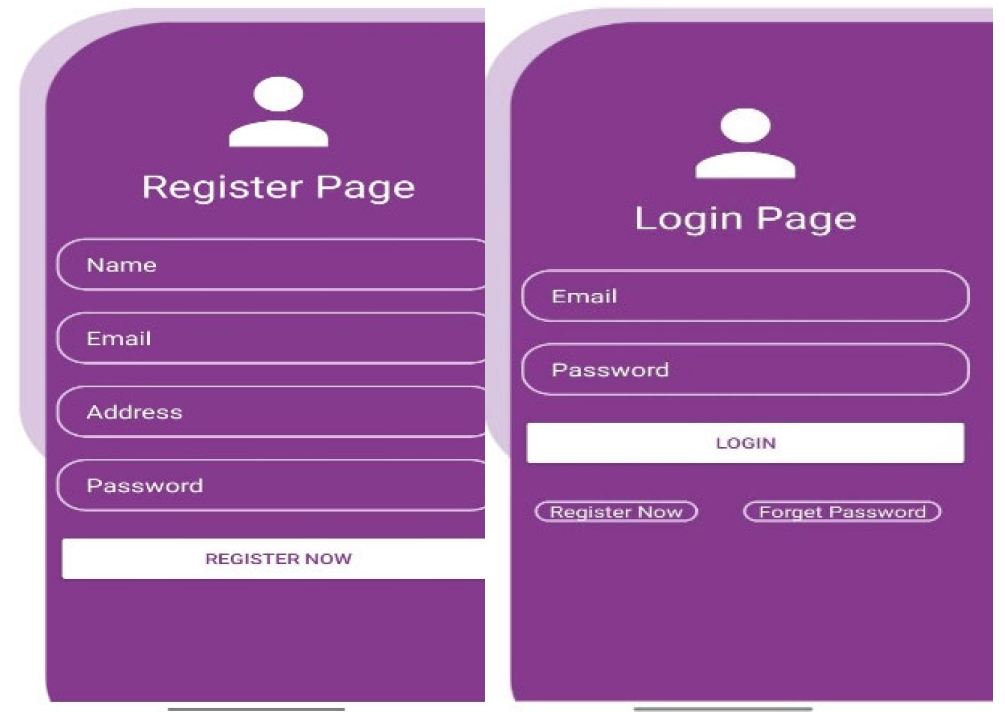
Figure 1: Registration and Login Screen
Where in Figure 2 services are available like time-based mute, contact-based mute and location-based mute.
The time-based scheduling feature also performed efficiently during testing. Users were able to set specific time intervals for automatic muting, and the application activated and deactivated silent mode precisely according to the defined schedule.
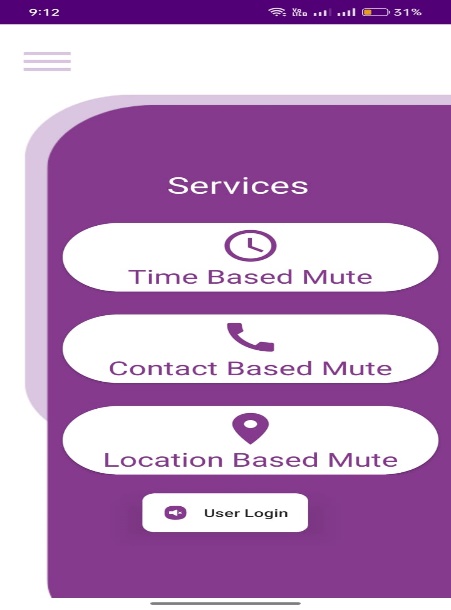
Figure 2: Service Screen
This functionality is presented in Figure 3 (Time-Based Scheduling Screen), where users can configure start and end times for silent mode. The results show that the system reliably followed scheduled timings without requiring manual adjustments, making it particularly useful for study sessions, meetings, and sleep hours.
Another important result was observed in the contact-based muting functionality. The application allowed users to block or allow specific contacts, ensuring that unwanted calls and messages were silenced while important communications remained accessible.
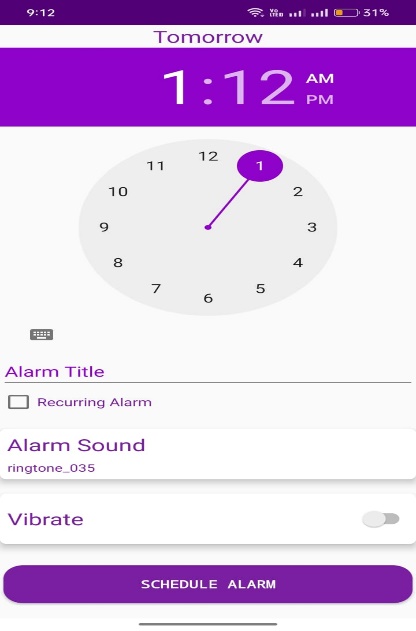
Figure 3: Time Mute Screen
This feature is illustrated in Figure 4 (Contact-Based Muting Screen), where users can manage selected contacts. Testing confirmed that the system successfully filtered incoming calls and notifications based on user preferences, enhancing both convenience and control.
The location-based muting feature produced accurate and reliable results. When the user entered a specified location, the system detected the change using GPS and automatically activated silent mode within a short delay.
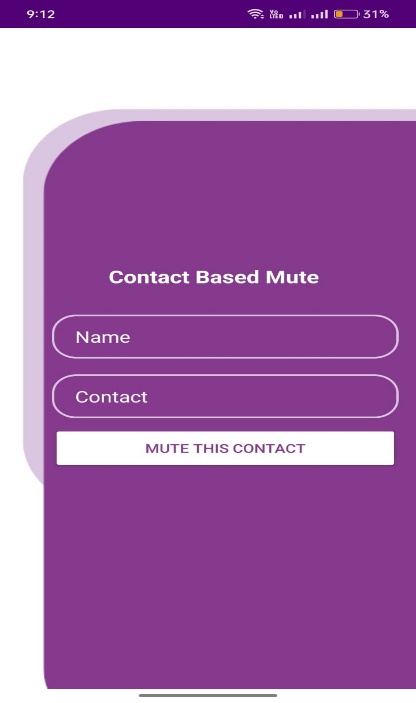
Figure 4: Contact Based Mute Screen
This functionality is demonstrated in Figure 5 (Location-Based Muting Screen), which shows how users can define and manage locations. The testing results confirmed that the system maintained approximately 95% accuracy in location detection, making it highly effective for practical use. Additionally, the system successfully handled multiple saved locations without conflict, ensuring smooth operation across different environments.
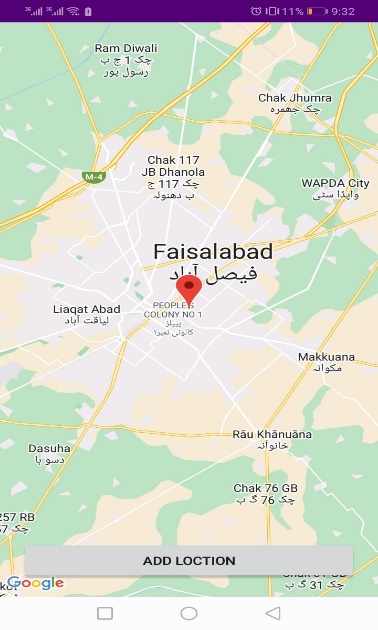
Figure 5: Location Based Mute Screen
From a performance perspective, the application operated smoothly with minimal resource consumption. The average application response time was observed to be between 2 to 4 seconds for location detection and less than 2 seconds for muting actions. The system maintained low CPU usage and minimal battery consumption, allowing it to run efficiently as a background service. Furthermore, the system was tested under different real-world environments, including classrooms, office settings, libraries, and places of worship. In all cases, the application performed as expected by automatically silencing the device without user intervention. The results confirm that AAA is capable of adapting to diverse environments and maintaining consistent performance.
The results demonstrate that the Automatic Aphonic App is a reliable, efficient, and user-friendly solution for managing smartphone audio behavior. The integration of location-based, time-based, and contact-based features ensures comprehensive control over device sound settings, while the system’s performance and accuracy make it suitable for real-world applications.
DISCUSSIONS
The results obtained from the implementation and testing of the Automatic Aphonic App (AAA) clearly demonstrate its effectiveness in addressing the common issue of unwanted mobile phone interruptions. The application successfully achieves its primary objective of automatically managing smartphone audio behavior based on contextual factors such as location, time, and user-defined preferences. By eliminating the need for manual intervention, AAA significantly reduces the chances of human error, particularly in situations where users may forget to switch their devices to silent mode. This makes the system highly practical for real-world usage in environments where silence and focus are essential.
One of the most important aspects of the application is its ability to accurately detect user location and respond accordingly. The location-based muting feature performed efficiently during testing, with only minimal delays observed due to GPS signal processing. Despite these slight delays, the system was able to reliably switch the device to silent mode upon entering predefined areas such as classrooms, offices, and places of worship. This confirms that the integration of location-based services plays a crucial role in enhancing the intelligence and automation capabilities of the application.
In addition to location awareness, the time-based scheduling feature proved to be highly effective in maintaining discipline and routine. Users were able to define specific time intervals during which the device automatically remained silent, such as study hours, meetings, or sleep periods. This feature not only improved user convenience but also contributed to better time management and increased productivity. The ability to automate these processes ensured that users did not need to repeatedly adjust their phone settings, thereby saving time and effort.
Another significant strength of the AAA system is its contact-based muting functionality, which provides users with greater control over their communication. By allowing selective muting of specific contacts, the application enables users to block unwanted calls or messages while still remaining accessible to important contacts. This level of customization enhances the overall user experience and makes the system adaptable to different personal and professional needs. It also helps users maintain a balance between connectivity and privacy [4,5].
From a usability perspective, the application demonstrates a high level of user-friendliness and accessibility. The interface is designed to be simple, intuitive, and easy to navigate, allowing users with minimal technical knowledge to configure and operate the system effectively. During testing, users were able to quickly understand and utilize the features without requiring extensive guidance. This highlights the importance of user-centered design in the development of mobile applications and contributes to the overall success of the system.
In terms of performance, the application operates efficiently as a background service with minimal impact on device resources. The testing results indicate low CPU usage, reduced memory consumption, and negligible battery drain, making it suitable for continuous operation. However, certain limitations were identified, such as dependence on GPS for location detection and minor delays in response time. Additionally, the effectiveness of the application may be influenced by network connectivity in some scenarios. Despite these limitations, the overall performance remains stable and reliable.
When compared to traditional manual silent mode settings available in Android devices, AAA offers a more advanced and intelligent solution. Unlike manual methods that require user intervention, AAA provides automation, context awareness, and multi-condition control, combining location, time, and contact-based features into a single system. This makes it more efficient, flexible, and user-friendly than existing solutions.
In conclusion, the discussion highlights that the Automatic Aphonic App is a robust and innovative solution for managing smartphone audio behavior. It successfully enhances user convenience, reduces interruptions, and promotes a more focused and disciplined environment. While there is room for improvement, particularly in optimizing location detection and reducing dependency on external services, the application provides a strong foundation for future advancements in context-aware mobile technologies.
CONCLUSIONS
The Automatic Aphonic App (AAA) successfully demonstrates how intelligent automation can significantly improve the way users manage smartphone audio behavior. By integrating location-based, time-based, and contact-based controls, the application effectively minimizes unwanted interruptions in sensitive environments such as classrooms, offices, and places of worship. The results show that AAA provides a reliable and practical solution to a common real-world problem, enhancing both user convenience and social etiquette.
Furthermore, the application reduces the dependency on manual interaction, which is often prone to human error and forgetfulness. Through its background operation and context-aware functionality, AAA ensures that smartphones automatically adapt to the user’s surroundings without requiring constant attention. This not only improves productivity and concentration but also creates a more disciplined and distraction-free environment for users.
The usability of the application is another key strength, as it is designed with a simple and intuitive interface that can be easily used by individuals with varying levels of technical expertise. Testing results confirm that the system performs efficiently with minimal resource consumption, making it suitable for real-world deployment on Android devices. Despite minor limitations such as reliance on GPS and slight detection delays, the overall performance remains highly satisfactory.
In conclusion, the Automatic Aphonic App represents a valuable contribution to the field of context-aware mobile applications. It highlights the potential of smart automation in enhancing everyday user experiences. Future improvements, such as AI-based prediction and enhanced battery optimization, can further strengthen the application’s capabilities and expand its usability in more advanced scenarios.
REFERENCES
- Dey, Anind K. “Understanding and using context.” Personal and Ubiquitous Computing, vol. 5, no. 1, 2001, pp. 4–7.
- Phillips, Bill et al. Android Programming: The Big Nerd Ranch Guide. Big Nerd Ranch Guides, 2019.
- Meier, Reto. Professional Android Application Development. Wiley Publishing, 2018.
- Sommerville, Ian. Software Engineering. 10th ed., Pearson Education, 2016.
- Lee, Wei-Meng. Beginning Android Application Development. Wiley, 2018.