
Journal of Advanced Biological Sciences
ISSN Print: N/A
ISSN Online: 3134-8823
About: Journal of Advanced Biological Sciences (JABS) is a peer-reviewed, open-access journal that aims to publish cutting-edge research and advancements in all areas of biological sciences. The journal serves as a platform for researchers, academicians, and professionals to contribute their scientific knowledge and foster innovation in biology-related fields.
Publisher Responsibility
Lumina Quest Publishing is responsible for providing the journal with the necessary publishing infrastructure, editorial support, production services, digital preservation, and dissemination of published content. The publisher supports transparent and ethical publishing practices and ensures that the journal’s publishing operations are conducted in accordance with applicable scholarly publishing standards.
The publisher is also responsible for maintaining the journal’s website, publication systems, archiving arrangements, and administrative support while respecting the independence of editorial decision-making.
Editorial Responsibility
The Editor-in-Chief and Editorial Board are responsible for maintaining the academic and scientific quality of the journal. The editorial team oversees the evaluation of submitted manuscripts, selection and coordination of peer reviewers, editorial assessment and decisions, and adherence to the journal’s scope and ethical standards.
Editorial decisions are made independently on the basis of academic quality, originality, methodological soundness, relevance, and ethical compliance, without inappropriate influence from the publisher, authors, reviewers, or commercial interests.
Editorial Independence
The editorial team maintains editorial independence in all decisions concerning manuscript evaluation, peer review, acceptance, revision, and rejection. The publisher does not interfere with the academic judgment of editors or reviewers.
Journal of Advanced Biological Sciences | Year 2026 | Volume 3 | Issue 2 | Pages 5-9
Determination of Concentrations of Some Heavy Elements in Liza Abu and Barbus Sharpeyi Fishes in the Laboratory
Asmaa Kadhim Ajeel 1*1College of Education for pure sciences, University of Thiqar, Iraq
View PDF Download XML Download DOI XML DOI: 10.66590/jabs2026030202
Abstract
Fish are the primary food consumed by humans from the aquatic system and their consumption may pose a threat to human health due to the accumulation of heavy metals in them, based on their concentrations. This study aimed to measure the accumulation of heavy metals (lead, cadmium, zinc and iron in the muscle tissue of Liza abu and Barbus sharpeyi fish, which are among the most consumed fish by citizens. Samples were collected from the public market in Dhi Qar Governorate and an atomic absorption device was used to estimate the concentration of these elements.
INTRODUCTION
Heavy metal pollution in the aquatic environment is a major concern worldwide and has great environmental significance, they accumulate when they enter water and sediments [1], because they are unable to decompose naturally in the aquatic environment [2]. Heavy metals concentrate in the organs of fish, posing a direct threat to all aquatic organisms and humans [3,4]. Its danger is reflected directly or indirectly on humans [5].
Many field studies have shown that the accumulation of metals in fish living in polluted waters means that large quantities of them may be stored in the fish tissues without causing death [6].
Fish is one of the most important sources of protein, vitamins, minerals and unsaturated fats such as Omega-3, The US Environmental Protection Agency also recommends eating two meals of fish per week [7,8]. This is mostly due to its unsaturated fatty acid content. These acids have been shown to participate in many metabolic functions, have an anti-inflammatory effect and reduce the accumulation of platelets, which are essential components of cell membranes, brain and nervous tissue [9].
Many studies have indicated the possibility of using fish as an indicator or biological guide to the pollution of the aquatic environment with heavy elements and obtaining clear information about the extent of pollution in river [5,10-15].
Which prompted the authorities concerned with human health in different countries to set standards and maximum permissible limits for these pollutants [16]. Barbus sharpeyi and Liza abu fish were chosen as biological indicators to determine the amount of heavy metal pollution in their tissues, as these types of fish are widely distributed in the waters of the Euphrates River and their meat is widely consumed by consumers.
Previous Studies
Ibrahim and Mahmoud [17], conducted a study on Tilapia zillii, Clarias Gariepinus and Mugil Cephalus fish from the Nile River to investigate the accumulation of minerals Mn, Fe, Cd, Pb, Cu and Zn.
Also, [18], estimated the concentrations of the metals Fe, Ni, Cu, Zn, Cr, Co in Mastacembelus armatus fish and the results showed that iron was the most abundant in all the studied organs.
A study was conducted in the Balkans, western Bulgaria, to evaluate the metals (Zn, Pb, Ni, Cu, Cd, As) of Scardinius erythrophthalmus L. fish, in three different seasons (spring, summer, autumn) and found that copper was higher than the internationally permitted limit [19].
Many researchers in Iraq have used fish as a bioindicator of heavy metal pollution, Al -Taee [20], determined the concentrations of ten heavy metals-academium, cobalt, chromium, copper, iron, mercury, manganese, nickel, lead and corundum—in the muscle tissues of three fish species: Barbus sharpeyi, Aspius vorax and C. carpio, collected from the Hilla River and the importance of this topic, many researchers have studied the bioaccumulation of heavy metals in various fish tissues, such as Al-Khafaji et al. [21], Al-Najar et al. [22,23], Mustafa et al. [24], Attiya et al. [25].
The Study Aim
The study aims to estimate the heavy metals cadmium, zinc, lead and iron in the muscles of Barbus sharpeyi and Liza abu fish and to assess the contamination of their meat with these pollutants, which have a cumulative, harmful and sometimes toxic effect on consumers' health.
MATERIALS AND METHODS
Chemical
All chemicals used in present investigation are bring from Hi media and BDH company.
Laboratory Animals
Two types of fish will be studied in terms of their exposure to pollution:
- Barbus sharpeyi
- Liza abu
These fish belong to the class of bony fishes. The following Table 1 shows the taxonomic position to which these fish belong based on Linnaeus, 1758 [26].
Fresh fish samples were obtained directly from the local market, with 8 replicates for each sample of Barbus sharpeyi and Liza abu fish.
The fish were transferred to plastic containers containing ice and placed in the refrigerator until analysis was conducted.
Sample Preparation for Analysis
- 5 grams of muscle tissue was taken from the fish under study and a stainless-steel knife was used to remove the muscle portion of the fish [27]
- Each sample was placed in a 200 ml beaker, then digested in a concentrated mixture of 18 ml nitric acid and 6 ml hydrogen peroxide, in 3:1 ratio, respectively
- The samples were placed on an electric heater at 150°C for 20 minutes and then allowed to cool to room temperature
- The previous steps were performed twice and then the solution was diluted to 50 ml using distilled water.
- The samples were filtered through filter paper
- Reference samples were prepared in the same manner
- Concentrations of the aforementioned heavy metals were determined using an atomic absorption spectrometer
Table 1: Shows the Taxonomic Status of the Fish Under Study
|
Animalia |
Animalia |
Kingdom |
|
Chordata |
Chordata |
Phylum |
|
Actinopterygii |
Actinopterygii |
Class |
|
Mugiliforme |
Cypriniformes |
Order |
|
Mugilidae |
Cyprinidae |
Family |
|
Liza |
Barbus |
Genus |
|
Abu |
sharpeyi |
Species |
|
Liza abu |
Barbus sharpeyi |
Binomial name |
Statistical Analysis of Results
The mean and standard deviation of the readings were calculated using (SPSS), n = 8, where n is the number of replicates for each sample [28].
RESULTS AND DISCUSSION
Estimating The Concentration of Heavy Metals in The Fish Under Study
In this study, the concentrations of heavy elements lead, oxide, zinc and iron were extracted from the muscles of two types of freshwater fish living in the Euphrates River that are loaded with metals, namely Barbus sharpeyi and Liza abu and the results were as shown in Tables 2 and 3 respectively.
Table 2: The Concentration of Lead, Academia, Zinc and Iron in the Muscles of Barbus Sharpeyi Fishes is Under Study
|
Fe(ppm) |
Zn(ppm) |
Cd(ppm) |
Pb(ppm) |
The element/ Sample number |
|
59.01 |
22.276 |
0.067 |
0.851 |
A1 |
|
67.70 |
18.429 |
0.080 |
0.584 |
A2 |
|
62.43 |
16.968 |
0.075 |
0.431 |
A3 |
|
50.67 |
21.354 |
0.142 |
0.643 |
A4 |
|
61.53 |
23.625 |
0.253 |
0.860 |
A5 |
|
70.19 |
18.458 |
0.193 |
0.542 |
A6 |
|
55.23 |
15.468 |
0.121 |
0.725 |
A7 |
|
53.68 |
20.534 |
0.143 |
0.803 |
A8 |
.
Table 3: The Following Table Shows the Concentrations of Heavy Metals in the Muscles of Liza Abu Fishes Under Study
|
Fe(ppm) |
Zn(ppm) |
Cd(ppm) |
Pb(ppm) |
The element/ Sample number |
|
189.65 |
25.48 |
0.032 |
1.442 |
B1 |
|
150.46 |
20.94 |
0.042 |
0.676 |
B2 |
|
95.66 |
23.07 |
0.074 |
0.484 |
B3 |
|
120.03 |
16.07 |
0.236 |
1.316 |
B4 |
|
98.67 |
24.06 |
0.624 |
1.284 |
B5 |
|
150.33 |
21.95 |
1.061 |
1.660 |
B6 |
|
168.65 |
22.44 |
0.065 |
1.350 |
B7 |
|
142.53 |
25.04 |
1.151 |
0.550 |
B8 |
Lead Element
The results showed that (87.5%) of the studied Barbus sharpeyi and Liza abu fish samples exceeded the permissible limit for lead concentration in fish, as determined by the WHO/FAO [29], which is 0.5 ppm [29]. In Barbus sharpeyi, the lead concentration ranged between 0.431 and 0.860 ppm, with a mean of 0.682 and a standard deviation of 0.159, as shown in Table 4. The highest lead value was found in sample number 5, followed by sample number 1. In Liza abu fish, the lead concentration ranged between 0.484 and 1.66 ppm, with a mean of 1.095 and a standard deviation of 0.455, as shown in Table 5. The highest lead value was found in sample number 6, followed by sample number 1, as shown in the Figure 1.
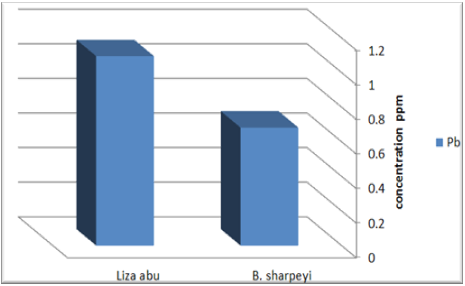
Figure 1: Shows the Concentration of Lead(ppm) in the Muscles of the Fish Under Study
This study is consistent with what was stated by Al-Siraj et al. where the lead content in the muscles of the cobia fish was 1.77 micrograms/liter dry weight.
The high lead levels in the studied fish are attributed to industrial and human activities. Some sewage outlets discharge untreated into the river and some light industries in the area also dump untreated waste into the river. The most significant sources of lead pollution are battery factories and the galvanized pipes used for transporting drinking water [30,31]. Cars are also a major source of lead pollution in Iraq [32], as tetraethyl lead is added to gasoline to improve its performance and convert lead into other compounds (lead oxide) that are released into the environment.
Cadmium Element
The results of this research showed that the cadmium concentration in Barbus sharpeyi ranged between (0.067-0.253) ppm, the mean 0.134 and standard deviation 0.064 as shown in the Table 4, The highest value was in sample number1, comparing these values with the maximum permissible limit according to the WHO/FAO, it was found that the cadmium concentration in all samples was within the permissible limit for Barbus sharpeyi fish.
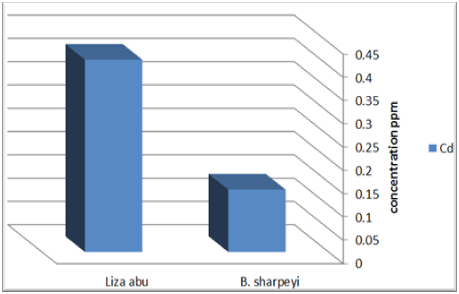
Figure 2: Shows the Concentration of Cadmium(ppm) in the Muscles of the Fish Under Study
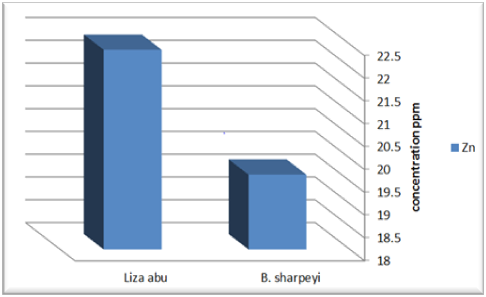
Figure 3: Shows the Concentration of Zinc(ppm) in the Muscles of the Fish Under Study
However, the results showed that some of the studied Liza abu fish samples exceeded the permissible limit for cadmium concentration in fish according to the WHO/FAO. The cadmium concentration ranged between 0.032-1.151 pmm and the mean 0.413 and standard deviation 0.476, as shown in the table5 and the highest value was in sample number 8, as shown in the Figure 2. Cadmium is a toxic heavy metal and its accumulation in the body leads to serious health problems for humans.
Zinc Element
The zinc concentration in Barbus sharpeyi fish samples ranged between 15.468-23.625 pmm and the mean 19.64 and standard deviation 2.78, as shown in the Table 4. The highest zinc value was recorded in sample number 5, while the lowest value was recorded in sample number 7. In the studied Liza abu fish samples, the zinc concentration also ranged between 16.07-25.48 pmm and the mean 22.38 and standard deviation 2.98, as shown in the table 5. The highest value was recorded in sample number 1. Therefore, the zinc concentration in all samples did not exceed the permissible limit according to WHO/FAO, as shown in the Figure 3.
Table 4: Shows the Results of the Descriptive Statistical Analysis of the Studied Barbus Sharpeyi Fish and the Permissible Values According to the Standard Specifications of the WHO and FAO
|
WHO/FAO |
Highest Value |
Lowest Value |
Standard Deviation |
Mean |
Metal (ppm) |
|
0.5 |
0.860 |
0.431 |
0.159 |
0.682 |
Lead (pb) |
|
0.5 |
0.253 |
0.067 |
0.064 |
0.134 |
Cadmium (cd) |
|
100 |
23.625 |
15.468 |
2.78 |
19.64 |
Zinc (Zn) |
|
99.4 |
70.19 |
50.67 |
6.78 |
60.06 |
Iron (Fe) |
.
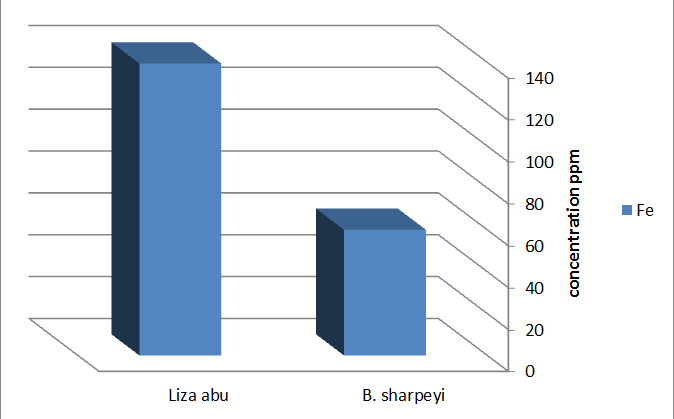
Figure 4: Shows the Concentration of Iron(ppm) in the Muscles of the Fish Under Study
Iron Element
The results showed that the iron concentration in all samples of Barbus sharpeyi and Liza abu fish under study was within the limits permitted by WHO/FAO.
The iron concentration in Barbus sharpeyi fish ranged between 50.67-70.19 pmm and and the mean 60.06 and standard deviation 6.78, as shown in the table4. The highest recorded iron value was in sample number 6. The iron concentration in Liza abu fish samples ranged between 95.66-189.65 pmm and the mean 139.50 and standard deviation 32.91, as shown in the Table 5. The highest recorded iron value was in sample number 1, as shown in the Figure 4 and this also agrees with what Al-Najjar found during his study of some heavy metals in the tissues of Lethrinus nebulosus fish, namely that the highest concentration was of iron in all parts of the body throughout the study period. Iron is considered one of the important and necessary elements that is not toxic in excess in the body.
Table 5: Shows the Results of the Descriptive Statistical Analysis of the Studied Liza Abu Fish and the Permissible Values According to the Standard Specifications of the WHO and FAO Organizations
|
WHO/FAO |
Highest Value |
Lowest Value |
Standard Deviation |
Mean |
Metal (ppm) |
|
0.5 |
1.660 |
0.484 |
0.455 |
1.095 |
Lead (pb) |
|
0.5 |
1.151 |
0.032 |
0.476 |
0.413 |
Cadmium (cd) |
|
100 |
25.48 |
16.07 |
2.98 |
22.38 |
Zinc (Zn) |
|
99.4 |
189.65 |
95.66 |
32.91 |
139.50 |
Iron (Fe) |
The results of the current study are consistent with what was found by Abdul Khader et al. [30], in studying the level of accumulation of some heavy elements in the muscles, liver and gills of common carp (Carpio Cyprinus) that were collected from three locations in the Diwaniyah River. That study found that the order of the heavy elements with the highest concentration for all fish samples and for all modeling locations follows the following descending order: iron > zinc > copper > lead. This was attributed to the relationship of this order with the amount of waste discharged into the river as well as to its abundance in the river.
All heavy metals were found in higher concentrations in Liza abu fish compared to Barbus sharpeyi fish, which is attributed to the feeding habits of the fish under study and Hussein and Fahd [33], indicated that fish fed on animal matter have a higher concentration of heavy metals than those fed on plant matter or mixed diets.
CONCLUSIONS
- The concentrations of the elements were less than the maximum limits allowed by WHO/FAO in the fish under study, with the exception of lead, which was more than the allowed limit in both types of fish under study
- All the heavy metals under study were more concentrated in the P.abu compared to the M.sharpey. This is due to the feeding habits of P.abu fish, which were of the detritivorous type
- The heavy metals in the fish under study were ranked in descending order of concentration as follows:
Fe > Zn > Pb > Cd
Recommendations
- This study recommends intensifying research on aquatic life in the Euphrates River, particularly fish of all types and species, to determine the extent of their contamination with various heavy metals. This is essential to prevent these pollutants from entering the food chain, thereby ensuring food safety and public health
- Wastewater should be treated before being released into the river environment and environmental monitoring should be implemented to control the concentrations of toxic elements it contains
- Rationalizing the use of phosphate fertilizers in agriculture
REFERENCES
- Olaifa, F.G. et al. “Lethal and sublethal effects of copper to the African catfish Clarias gariepinus.” African Journal of Biomedical Research, vol. 7, 2004, pp. 65–70.
- Has-Schön, E. et al. “Heavy metal profile in five fish species included in human diet, domiciled in the end flow of river Neretva.” Archives of Environmental Contamination and Toxicology, vol. 50, 2006, pp. 545–551.
- Mendil, D. et al. “Seasonal investigation of trace element contents in commercially valuable fish species from the black sea, Turkey.” Food and Chemical Toxicology, vol. 48, no. 3, 2010, pp. 865–870.
- Prudente, M. et al. “Metal levels in some commercial fish species from manila bay, the Philippines.” Marine Pollution Bulletin, vol. 34, no. 8, 1997, pp. 671–674.
- Malik, D.S. et al. “Review on impact of water pollution on freshwater fish species and their aquatic environment.” Journal of Advances in Environmental Pollution Management, 2020, pp. 11–28.
- Jezierska, B. and Witeska, M. “The metal uptake and accumulation in fish living in polluted waters.” Soil and Water Pollution Monitoring, Protection and Remediation, Springer, 2006, pp. 107–114.
- Kris-Etherton, P.M. et al. “Fish consumption, fish oil, omega-3 fatty acids and cardiovascular disease.” Circulation, vol. 106, no. 21, 2002, pp. 2747–2757.
- Javed, M. et al. “Studies on the oxidative stress and gill histopathology in Channa punctatus of the canal receiving heavy metal-loaded effluent of kasimpur thermal power plant.” Environmental Monitoring and Assessment, vol. 187, 2015, article 4179. https://doi.org/10.1007/s10661-014-4179-6.
- Khalili, S. and Sampels, S. “Nutritional value of fish: Lipids, proteins, vitamins and minerals.” Reviews in Fisheries Science & Aquaculture, vol. 26, no. 2, 2018, pp. 243–253.
- Mora, C. et al. “Patterns and processes in reef fish diversity.” Nature, vol. 421, 2003, pp. 933–936.
- Mora, C. et al. “The completeness of taxonomic inventories for describing the global diversity and distribution of marine fishes.” Proceedings of the Royal Society B, vol. 275, 2008, pp. 149–155.
- Sekiranda, S.B.K. Water Quality Patterns, Invertebrates and Fish Community Structure in Three Shallow Bays of Lake Victoria (Uganda) with Varying Catchment Land Use. Makerere University, 2006. PhD dissertation.
- Das, S.K. and Chakrabarty, D. “The use of fish community structure as a measure of ecological degradation: A case study in two tropical rivers of India.” Biosystems, vol. 90, no. 1, 2007, pp. 188–196.
- Bud, I. et al. “Study concerning chemical composition of fish meat depending on the considered fish species.” Lucrări Științifice Zootehnie și Biotehnologii, vol. 2, 2008, pp. 201–206.
- Naigaga, I. et al. “Fish as bioindicators in aquatic environmental pollution assessment: A case study in Lake Victoria wetlands, Uganda.” Journal of Physics and Chemistry of the Earth, vol. 36, 2011, pp. 918–928.
- Valipour, M. et al. “A new approach for environmental crises and its solutions by computer modeling.” The 1st International Conference on Environmental Crises and Its Solutions, Kish Island, Iran, 2013.
- Ibrahim, S.A. and Mahmoud, S.A. “Effect of heavy metals accumulation on enzyme activity and histology in liver of some Nile fish in Egypt.” Egyptian Journal of Aquatic Biology & Fisheries, vol. 9, no. 1, 2005, pp. 203–219.
- Javed, M. and Usmani, N. “Assessment of heavy metal (Cu, Ni, Fe, Co, Mn, Cr, Zn) pollution in effluent dominated rivulet water and their effect on glycogen metabolism and histology of Mastacembelus armatus.” SpringerPlus, vol. 2, no. 1, 2013, pp. 1–13.
- Georgieva, E. et al. “Metal effects on histological and biochemical parameters of common rudd (Scardinius erythrophthalmus L.).” Archives of Polish Fisheries, vol. 22, no. 3, 2014, pp. 197–206.
- Al-Taee, M.S. Some Metals in Water, Sediment, Fish and Plants of the Shatt Al-Hilla. University of Basrah, 1999. M.Sc. thesis.
- Al-Khafaji, B.Y. et al. “Trace metals distribution in fish tissues (Cyprinus carpio and Barbus luteus) and sediments Al-Marsh south of Iraq.” Conference on Environmental Sciences, 4th, Babylon University, 2012, pp. 180–198.
- Al-Najar, G.A. et al. “Bioaccumulation for some heavy metals in organs of lethrinus nebulosus and concentrations in water and sediment Iraqi marine water.” Iraqi Journal of Aquaculture, vol. 14, no. 1, 2017, pp. 61–85.
- Al-Najar, G.A. et al. “Seasonal variations of some heavy metal's concentrations in nemipterus japonicus collected from Iraqi marine waters.” JKAU: Marine Sciences, vol. 27, no. 1, 2017, pp. 43–52.
- Mustafa, S.A. et al. “Histopathology and level of bioaccumulation of some heavy metals in fish, carasobarbus luteus and Cyprinus carpio tissues caught from Tigris River, Baghdad.” Iraqi Journal of Agricultural Sciences, vol. 51, no. 2, 2020, pp. 698–704.
- Attiya, R.M. et al. “Comparison study of content some heavy metals in muscles of imported and local Mullus barbatus and boops Boops fish in Zliten–Libya.” Journal of Misurata University for Agricultural Sciences, vol. 4, no. 2, 2023, pp. 144–166.
- Coad, B.W. Freshwater Fishes of Iraq. 2010.
- Baharom, Z. and Ishak, M. “Determination of heavy metal accumulation in fish species in Galaes river, Kelantan and Beranang mining pool, selangor.” Procedia Environmental Sciences, vol. 30, 2015, pp. 320–325.
- Salem, K.S.M. Principles of Statistics Science. 2004, pp. 250–454.
- Akesson, M.T. et al. Joint FAO/WHO Food Standards Programme Codex Committee on Contaminants in Foods. 2015.
- Abdul Khader, Najm Abdul Wahid et al. “A study of the accumulation levels of some mineral elements in the muscles, liver and gills of common carp (Cyprinus carpio) collected from the Diwaniyah River.” Al-Qadisiyah Journal of Pure Sciences, vol. 7, no. 1, 2002, pp. 189–194.
- Gaw, A. et al. Clinical biochemistry. 2nd ed., Churchill Livingstone, 1999, pp. 115.
- Mohammed, S.F. Ecological Studies on Some Air Pollutants Impact Human Health, Nerium oleander L. and Phragmites australis L. Plants within Hawler City. University of Salahaddin, Iraq, 2003. M.Sc. thesis.
- Hussein, S.A. and Fahad, K.K. “Seasonal variations in abiotic ecological conditions in Al-Garaf canal, one of the main Tigris branches at Thi-Qar Province.” Basrah Journal of Science (B), vol. 26, no. 1, 2008, pp. 38–47.