
Journal of Advanced Biological Sciences
ISSN Print: N/A
ISSN Online: 3134-8823
About: Journal of Advanced Biological Sciences (JABS) is a peer-reviewed, open-access journal that aims to publish cutting-edge research and advancements in all areas of biological sciences. The journal serves as a platform for researchers, academicians, and professionals to contribute their scientific knowledge and foster innovation in biology-related fields.
Publisher Responsibility
Lumina Quest Publishing is responsible for providing the journal with the necessary publishing infrastructure, editorial support, production services, digital preservation, and dissemination of published content. The publisher supports transparent and ethical publishing practices and ensures that the journal’s publishing operations are conducted in accordance with applicable scholarly publishing standards.
The publisher is also responsible for maintaining the journal’s website, publication systems, archiving arrangements, and administrative support while respecting the independence of editorial decision-making.
Editorial Responsibility
The Editor-in-Chief and Editorial Board are responsible for maintaining the academic and scientific quality of the journal. The editorial team oversees the evaluation of submitted manuscripts, selection and coordination of peer reviewers, editorial assessment and decisions, and adherence to the journal’s scope and ethical standards.
Editorial decisions are made independently on the basis of academic quality, originality, methodological soundness, relevance, and ethical compliance, without inappropriate influence from the publisher, authors, reviewers, or commercial interests.
Editorial Independence
The editorial team maintains editorial independence in all decisions concerning manuscript evaluation, peer review, acceptance, revision, and rejection. The publisher does not interfere with the academic judgment of editors or reviewers.
Journal of Advanced Biological Sciences | Year 2026 | Volume 3 | Issue 2 | Pages 1-4
A Comprehensive Analysis of Lipid Profiles in Patients with Beta Thalassemia major
Fatimah Kadhim Ibrahim Al-Mahdawi 1* , Mazin Razooqi Mohammed2 and Ammar Kadi3
1College of dentistry, Diyala University, Iraq
2Bilad Alrafidain University, Diyala, 32001, Iraq
3Department of food and biotechnology, South Ural State University, Chelyabinsk, Russia
View PDF Download XML Download DOI XML DOI: 10.66590/jabs2026030201
Abstract
β-thalassemia major is expected to be fatal without early treatment with iron chelates and blood transfusions for the patient. Although lipid disorders and β-thalassemia are related, it is not clear how these problems developed. Although lipid abnormalities are linked to β-thalassemia, how these issues come about is unknown. Aim of the study: This is a cross-sectional study in which we will attempt to analyze and evaluate the lipid profile in β-Thalassemia patients' sera. Subjects and Methods: 175 participants were classified into two groups; the first involved 100 patients with β-thalassemia major (59 males and 41 females), aged 18 to 22 years. The second group involved 75 healthy individuals aged 18 to 32 (35 males and 40 females). Results: The S. cholesterol concentration was reduced, as were the low-density lipoprotein concentration and high-density lipoprotein, which were both significantly reduced, while the S. triglyceride concentration rose significantly in β-thalassemia major patients. Conclusion: The fluctuation of the level of blood lipids in patients with β-thalassemia major, although it has a downward trend from its typical concentrations, requires a pause because it may have health consequences on various levels, especially those directly related to lipids and their metabolic pathways.
INTRODUCTION
A genetic hemoglobin disorder known as β-thalassemia results in persistent hemolytic anemia and defective β-globin chain production. [1,2]. β-thalassemia is classified into two types depending on clinical severity: intermedia and major β-thalassemia [3,4]. β-thalassemia major is considered fatal unless treatment is done early by regular transfusion of blood to the patient and the use of iron chelates [5,6]. An abnormal feature in lipids is found in β-thalassemia [7]. The manner of development of these disorders is not entirely apparent; however, some mechanisms are suggested through accelerated red blood cell production, resulting in a rise in cholesterol absorption by histiocytes and macrophages of the reticuloendothelial system, plasma dilution caused by anemia, cytokine release, liver dysfunction due to excess iron in the body and hormonal dysfunction [8]. In contrast, β-thalassemia major primarily affects lipids and lipoproteins [9]. In β-thalassemia, major hypocholesterolemia resulting in a decrease of low-density and high-density lipoprotein has been described in [10,11].
Aim of the Study
We will endeavor to conduct analytical investigations of the lipid profile (cholesterol, triglycerides, low-density lipoprotein and high-density lipoprotein) in a sample of Iraqi β-thalassemia major patients.
MATERIALS AND METHODS
One hundred and seventy-five people in total were chosen for the investigation. They comprised two groups. The first included 100 β-thalassemia major patients (59 males and 41 females) aged 18 and 22 on regular blood transfusion therapy. The second one included 75 healthy volunteers aged 18 to 32 (35 males and 40 females). The lipid profile in sera of β-thalassemia major patients and healthy individuals were assessed using an automated quantitative approach (The COBAS INTEGRA® 400 plus test) (from Roche, Germany) while fasting for 12 hours following their previous meal.
Quantitative analysis was conducted using the Windows version of the data-processing software package SPSS 22. The standard error and mean were used to express the data. The t-test compares characteristics between β-thalassemia major patients and healthy individuals. A two-tail value is used to determine significance. The variation's p-value was ≤0.05, which was regarded as significant
RESULTS
One hundred patients with β-thalassemia major, aged 18 to 22, involving 51 male and 41 female patients, have mean hemoglobin levels of 7.5g/dL and mean ferritin levels of 3708 ng/l (Table 1).
The S. cholesterol concentration was significantly lower in β-thalassemia major patients (96.70±1.75 mg/dL) when compared to the healthy individuals (130±2.09 mg/dL), as were the low-density lipoprotein and high-density lipoprotein concentrations in patients (52.05±0.35mg/dL and 33.85±0.28 mg/dL) when compared to the healthy individuals (90.90±0.66mg/dL and 45.55±0.79mg/dL); p-value <0.000, as detailed in (Table 1 and Figure 1).
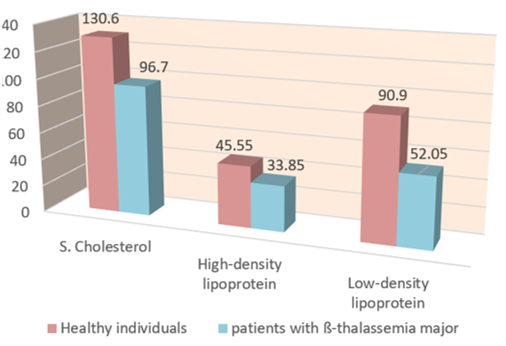
Figure 1: S. Cholesterol, High Density Lipoprotein and Low-Density Lipoprotein in β-Thalassemia Major Patients and Healthy Individuals
Table 1: General Characterization and Clinical Feature β-Thalassemia Major Patients
|
Age range |
(18-22) years |
|
Male |
59 |
|
Female |
41 |
|
Mean Hb g/dL |
7.5 |
|
Mean Ferritin ng/l |
3708 |
.
On the contrary, S. triglyceride concentrations rise significantly in β-thalassemia major patients (113.65±1.02 mg/dL) when compared to healthy individuals (93.35±0.81 mg/dL); p-value <0.000 (Table 2 and Figure 2).
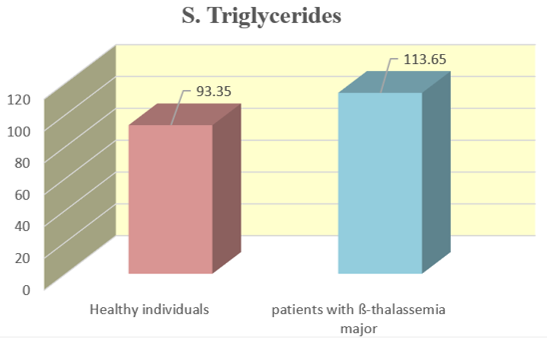
Figure 2: S. Triglycerides in β-Thalassemia Major Patients and Healthy Individuals
Table 2: lipid Profile Through β-Thalassemia Major Patients and Healthy Individuals
|
Lipid Profile |
Healthy individuals Mean±SE |
β-thalassemia major patients Mean±SE |
p-value |
|
S. Cholesterol mg/dL |
130.60±2.09 |
96.70±1.75 ⬇️ |
<0.000 |
|
S. Triglycerides mg/dL |
93.35±0.81 |
113.65±1.02 ⬆️ |
|
|
Low density lipoprotein mg/dL |
90.90±0.66 |
52.05±0.35 ⬇️ |
|
|
High density lipoprotein mg/dL |
45.55±0.79 |
33.85±0.28 ⬆️ |
DISCUSSION
Plenty of studies have found that lipids and lipoproteins play an essential role in the pathophysiology and development of atherosclerosis and cardiovascular diseases, as well as in the preventive role of some of them. The prevalence of these chronic illnesses is a growing global health concern [12,13], which encourages us to evaluate the lipid profile in β-thalassemia major in Iraqi patients. The significant decrease in S. cholesterol found in β-thalassemia major patients is consistent with what was recorded by Papanastasiou et al. and some other French studies of low levels of S. cholesterol [14,15]. This significant decrease is impressive on the face of it, but from a realistic health assessment, it still raises caution. With all the "rumors" about the destructive role of cholesterol, it remains essential and indispensable in many basic physiological activities. It becomes clear that various factors, including elevated ferritin levels (iron overload), liver damage and hormone disorders, impact these individuals' lipid profiles [16,17]. This was not spared by the current study's patients, as the increase in ferritin levels and the consequent health consequences included lipid abnormalities. When thalassemia patients get frequent blood transfusion therapy, the liver is the primary location of iron buildup, which is a common cause of morbidity. Iron overload can occur in reticuloendothelial cells as well as hepatocytes. People with excess iron produce more free radicals through the Fenton reaction. These free radicals accumulate in the liver, heart and other organs, severely destroying tissue [18]. Triglyceride levels were increased in this study, similar to Ricchi et al. and Hartman et al., who reported that an increase in S. triglycerides in diseases such as thalassemia may be due to extrahepatic lipolytic activity [19,20], but different from Amendola et al., who reported a decrease in S. triglycerides in thalassemia [21]. However, such differences recorded here or there may be due to human and ethnic differences associated with the diversity of dietary and population habits and behaviors, not to mention the nature of what thalassemia patients receive from health measures depending on their areas of presence.
CONCLUSIONS
Since the level of lipids in the blood in the case of beta-thalassemia deviates from the typical concentrations, this can result in health consequences, whether those related to cardiovascular diseases or others. This necessitates paying attention to thalassemia patients represented in preventive health monitoring and prompts the conduct of procedural studies to work on restoring lipid levels to their normal state.
REFERENCES
- AL-Mahdawi, F.K.I. et al. “Common hemoglobinopathies for couples premarital individual and its influence on hemostasis and immune state.” Medico-Legal Update, vol. 21, no. 2, 2021, pp. 529.
- Abdulhameed, L.Q. and M.W.M. Alzubaidy. “Association between polymorphism of the CRP gene rs1130864 and hypertension among iraqi hypertensive patients.” Advancements in Life Sciences, vol. 10, no. 2, 2023, pp. 157–160.
- Elia, Z.N. et al. “Estimation of anti-thyroglobulin and anti-thyroid peroxidase among thalassemia major patients.” Annals of Tropical Medicine and Public Health, vol. 22, 2019, pp. 12.
- AL-Mahdawi, F.K.I. et al. “Evaluation inhibin B, FSH and LH in male with thalassemia.” Indian Journal of Forensic Medicine & Toxicology, vol. 14, no. 2, 2020.
- Mavrogeni, S. et al. “Magnetic resonance evaluation of liver and myocardial iron deposition in thalassemia intermedia and β-thalassemia major.” The International Journal of Cardiovascular Imaging, vol. 24, no. 8, 2008, pp. 849–854.
- AL-Mahdawi, F.K.I. et al. “Screening tests for voluntarily donated blood in Diyala governorate.” AIP Conference Proceedings, vol. 2398, no. 1, October 2022. AIP Publishing.
- Amendola, G. et al. “Lipid profile in β-thalassemia intermedia patients: correlation with erythroid bone marrow activity.” International Journal of Laboratory Hematology, vol. 29, no. 3, 2007, pp. 172–176.
- Shalev, H. et al. “Hypocholesterolemia in chronic anemias with increased erythropoietic activity.” American Journal of Hematology, vol. 82, no. 3, 2007, pp. 199–202.
- Deiana, L. et al. “Influence of β⁰-thalassemia on the phenotypic expression of heterozygous familial hypercholesterolemia: A study of patients with familial hypercholesterolemia from Sardinia.” Arteriosclerosis, Thrombosis and Vascular Biology, vol. 20, no. 1, 2000, pp. 236–243.
- Giardini, O. et al. “Serum lipid pattern in β-thalassaemia.” Acta Haematologica, vol. 60, no. 2, 1978, pp. 100–107.
- Amendola, G. et al. “Lipid profile in β-thalassemia intermedia patients: correlation with erythroid bone marrow activity.” International Journal of Laboratory Hematology, vol. 29, no. 3, 2007, pp. 172–176.
- AL-Mahdawi, F.K.I. et al. “Comparison of non-fasting and fasting lipid profile in dyslipidemia patients.” Indian Journal of Forensic Medicine & Toxicology, vol. 15, no. 2, 2021, pp. 1465.
- Amendola, G. et al. “Lipid profile in β-thalassemia intermedia patients: Correlation with erythroid bone marrow activity.” International Journal of Laboratory Hematology, vol. 29, no. 3, 2007, pp. 172–176.
- Chapman, M.J. et al. “Raising high-density lipoprotein cholesterol with reduction of cardiovascular risk: The role of nicotinic acid a position paper developed by the European consensus panel on HDL-C.” Current Medical Research and Opinion, vol. 20, no. 8, 2004, pp. 1253–1268.
- Expert Panel on Detection, E. “Executive summary of the third report of the national cholesterol education program (NCEP) expert panel on detection, evaluation and treatment of high blood cholesterol in adults (Adult Treatment Panel III).” JAMA, vol. 285, no. 19, 2001, pp. 2486–2497.
- Suman, R. et al. “Lipid profile in children of β-thalassemia major and their correlation with serum ferritin.” International Journal of Contemporary Pediatrics, vol. 4, no. 2, 2017, pp. 543–547.
- AL-Mahdawi, F.K.I. et al. “Screening tests for voluntarily donated blood in Diyala governorate.” AIP Conference Proceedings, vol. 2398, no. 1, October 2022. AIP Publishing.
- Livrea, M.A. et al. “Oxidative stress and antioxidant status in beta-thalassemia major: Iron overload and depletion of lipid-soluble antioxidants.” 1996.
- Ricchi, P. et al. “Hypocholesterolemia in adult patients with thalassemia: A link with the severity of genotype in thalassemia intermedia patients.” European Journal of Haematology, vol. 82, no. 3, 2009, pp. 219–222.
- Hartman, C. et al. “Hypocholesterolemia in children and adolescents with β-thalassemia intermedia.” The Journal of Pediatrics, vol. 141, no. 4, 2002, pp. 543–547.
- Amendola, G. et al. “Lipid profile in β-thalassemia intermedia patients: Correlation with erythroid bone marrow activity.” International Journal of Laboratory Hematology, vol. 29, no. 3, 2007, pp. 172–176.