

Journal of Advanced Biological Sciences
ISSN Print: N/A
ISSN Online: 3134-8823
About: Journal of Advanced Biological Sciences (JABS) is a peer-reviewed, open-access journal that aims to publish cutting-edge research and advancements in all areas of biological sciences. The journal serves as a platform for researchers, academicians, and professionals to contribute their scientific knowledge and foster innovation in biology-related fields.
Publisher Responsibility
Lumina Quest Publishing is responsible for providing the journal with the necessary publishing infrastructure, editorial support, production services, digital preservation, and dissemination of published content. The publisher supports transparent and ethical publishing practices and ensures that the journal’s publishing operations are conducted in accordance with applicable scholarly publishing standards.
The publisher is also responsible for maintaining the journal’s website, publication systems, archiving arrangements, and administrative support while respecting the independence of editorial decision-making.
Editorial Responsibility
The Editor-in-Chief and Editorial Board are responsible for maintaining the academic and scientific quality of the journal. The editorial team oversees the evaluation of submitted manuscripts, selection and coordination of peer reviewers, editorial assessment and decisions, and adherence to the journal’s scope and ethical standards.
Editorial decisions are made independently on the basis of academic quality, originality, methodological soundness, relevance, and ethical compliance, without inappropriate influence from the publisher, authors, reviewers, or commercial interests.
Editorial Independence
The editorial team maintains editorial independence in all decisions concerning manuscript evaluation, peer review, acceptance, revision, and rejection. The publisher does not interfere with the academic judgment of editors or reviewers.
Journal of Advanced Biological Sciences | Year 2024 | Volume 1 | Issue 2 | Pages 15-22
Assessment of Heavy Metal Pollution in Roadside Soils Along the Mubi-Yola Highway, Adamawa State, Nigeria
Priscilla Alexander1, Ibrahim B. Bwatanglang2 and Nachana’a Timothy 3*1,2,3Department of Pure and Applied Chemistry, Faculty of Science, Adamawa State University, Mubi, Nigeria
View PDF Download XML Download DOI XML DOI: 10.66590/jabs2024010203
Abstract
The concentrations of selected heavy metals, including Cd, Pb, Zn, Cr, Fe, Mg, Mn, Co, Ni and Cu, were investigated in roadside soils along the Mubi-Yola Highway in Adamawa State, Nigeria. Surface soil samples were collected from five towns: Mubi, Hong, Gombi, Song and Girei. Samples were obtained at a distance of 20 meters from the roadside using a soil auger and were digested with HNO₃ and HCl prior to analysis by Atomic Absorption Spectrophotometry (AAS). The results confirmed the presence of all investigated heavy metals in the studied soil samples, with concentrations occurring in the order: Fe>Mn>Zn>Mg>Pb>Co>Ni>Cu>Cd>Cr Pollution index analysis indicated relatively high contamination levels for Pb, Fe, Mn, Ni and Co across most sampling sites, although Pb contamination at Hong and Gombi was classified as moderate, likely due to anthropogenic activities. In contrast, Cd, Zn, Cr, Mg and Cu showed pollution index values below 1 (PI<1), indicating that the sites were considered unpolluted with respect to these metals. The degree of contamination (CD) values exceeded 20 at all locations, indicating very high contamination levels. Furthermore, pollution load index (PLI) values greater than 1 demonstrated deterioration of soil quality at all study sites, following the order: Girei>Mubi>Song>Gombi>Hong The enrichment factor (EF) values suggested that most elements ranged from deficient to minimally enriched. In addition, the geo-accumulation index (Igeo) revealed contamination by Pb, Fe, Mn, Co and Ni, whereas Cd, Zn, Cr, Mg and Cu were classified as uncontaminated because their Igeo values were below zero. Overall, the findings indicate that the studied roadside soils were contaminated by several heavy metals, primarily as a result of human and traffic-related activities.
INTRODUCTION
Environmental problems associated with heavy metal contamination have become increasingly serious, particularly in developing countries. Rapid industrialization and urbanization, together with increased traffic activities, contribute significantly to the accumulation of heavy metals released from vehicles into roadside environments. Heavy metal pollution in agricultural regions resulting from traffic emissions may contaminate crops cultivated near roadsides [1,2].
According to Singh [3], a heavy metal is any metallic element with relatively high density that exhibits toxic or poisonous effects even at low concentrations. In general, any toxic metal may be classified as a heavy metal regardless of its atomic mass or density. Heavy metals comprise a loosely defined group of elements exhibiting metallic characteristics, including transition metals, certain metalloids, lanthanides and actinides. McIntyre [4] described heavy metals as common transition metals such as copper, lead and zinc.
Heavy metals naturally occur in soil environments through pedogenetic processes involving weathering of parent rock materials, usually at trace levels (<1000 mg/kg) that are rarely toxic [5,6]. However, additional sources of heavy metal contamination include geogenic, industrial, agricultural, pharmaceutical, domestic effluents and atmospheric activities [7].
Industrial sources of heavy metals include metal refining processes, coal combustion in power plants, petroleum combustion, nuclear power stations, high-voltage transmission systems, plastics manufacturing, textile industries, microelectronics, pesticides, wood preservation and paper processing industries [8]. In agricultural lands worldwide, heavy metal contamination may also originate from natural sources, mining operations, smelting activities, agrochemical applications, sewage sludge disposal and the use of livestock manure [9].
The content of heavy metals in soil and their impact on ecosystems can be influenced by many natural factors, such as parent material, climate and soil processes and anthropogenic activities such as, industry, agriculture and transportation [10]. Their bioavailability is influenced by physical factors such as temperature, phase association, adsorption and sequestration. It is also affected by chemical factors that influence speciation at thermodynamic equilibrium, complexion kinetics, lipid solubility and octanol/water partition coefficients [11]. Biological factors such as species characteristics, trophic interactions and biochemical/physiological adaptation, also play an important role [12].
Excess of metal pollutants deposited on soils may be transformed and transported to vegetation and from plants they pass on to animals and human being [13]. Heavy metal exposure to human occurs through three primary routes namely inhalation, ingestion and skin absorption. The threat that heavy metals pose to human and animal health is aggravated by their low environmental mobility, even under high precipitations and their long term persistence in the environment [14]. Also, human exposure has risen dramatically as a result of an exponential increase of their use in several industrial, agricultural, domestic and technological applications [15]. All metals are toxic at higher concentrations [16]. Excessive levels can be damaging to the organism. Other heavy metals such as mercury, plutonium and lead are toxic metals that have no known vital or beneficial effect on organisms and their accumulation over time in the bodies of animals can cause serious illness. Certain elements that are normally toxic are for certain organisms or under certain conditions, beneficial. Examples include vanadium, tungsten and even cadmium [17].
According to Reena et al. [18] heavy metals disrupt metabolic functions in two ways: First they accumulate and thereby disrupt function in vital organs and glands such as the heart, brain, kidneys, bone, liver, etc. Secondly they displace the vital nutritional minerals from their original place, thereby, hindering their biological function.
It is, however, impossible to live in an environment free of heavy metals. There are many ways by which these toxins can be introduced into the body such as consumption of foods, beverages, skin exposure and the inhaled air. Soil to plant transfer is one of the key processes of human exposure to heavy metals through the food chain.
Numerous studies on roadside soil pollution have focused on total emission loads of heavy metals into open grassland and agricultural areas [19-21]. Recently, roadside soils have been an increasingly important sampling medium for assessing anthropogenic metal concentrations. A variety of heavy metals have been measured in roadside soils and vegetation which have been reported by many researchers [22,23]. The most frequently reported heavy metals of concern have been Pb, Zn and Cu. These heavy metals in roadside soils are principally derived from vehicle emissions, wears and tears on automobile parts [23].
Soils are critical in assessing the potential environmental impacts of automobile emissions and several researchers have indicated the need for a better understanding of heavy metal pollution of roadside soils [24,25]. Nabulo et al. [21] has observed that the most economical and reasonable method for monitoring heavy metals in the atmosphere is using soil and vegetation samples. Hence, soil and vegetation have been widely used as cumulative matrices of long and short term exposure respectively to environmental pollutants [26,27].
The level of contamination of heavy metals in road side soil can be assess by contamination indices such as Contamination Factor (CF), the degree of contamination (CD), Pollution Load Index (PLI), Enrichment Factor (EF) and Geoaccumulation index (I-geo) [28].
Contamination Factor (CF) is the ratio of the measured concentration of the examined metals in soil to the geochemical background concentration or reference value of the heavy metals or the background value of heavy metal in the uncontaminated soil, while the degree of contamination is the summation of the values of the contamination factor. On the other hand pollution load index is the amount of stress placed upon an ecosystem by pollution, physical or chemical released into it by man-made or natural means. Product of the values of CF rise to one over the number of (CF) under consideration. However, I-geo is the log to base two of the ratio of the values of the concentration of the metal measured to the concentration in the unpolluted soil [29,30].
The Geoaccumulation Index (Igeo) was originally defined by Barbieri [31] for metal concentrations in the 2-micron fraction and was developed as global standard shale values. Geoaccumulation Index (Igeo) and Enrichment Factor (EF) in metals are indicators used to assess the presence and intensity of anthropogenic contaminant deposition on surface soil. These indexes of potential contamination are calculated by the normalization of one metal concentration in the topsoil respect to the concentration of a reference element. A reference element is an element particularly stable in the soil, which is characterized by absence of vertical mobility and/or degradation phenomena. The constituent chosen should also be associated with finer particles (related to grain size) and its concentration should not be anthropogenically altered [29,31].
In agricultural areas, uptake of heavy metals through the soil-crop system could play a predominant role in human exposure to heavy metals. Heavy metals present in the roadside soils may be transported through the food chain, which may have a significant toxicity to both plants and animals. The purpose of this study is to assess the heavy metal contaminations in road site soil using pollution index, degree of contamination, pollution load index, the enrichment factor and geo-accumulation index.
MATERIALS AND METHODS
Area of Sampling
Five major towns along Mubi-Yola highway were selected for soil sampling. This road was chosen for the study because it is the only major road with heavy traffic linking Mubi (the second largest city in Adamawa State) to Yola (the State capital). The selected towns are: Mubi, Hong, Gombi, Song and Gerie.
Sample Collection
A total of ten surface soil samples were randomly collected from Mubi, Hong, Gombi, Song and Gerei. Two surface soil samples were randomly collected from each town, one from each side of the road at a distance of 20 m (the nearest crop distance away from the edge of the road in the study area). The soil sampling spot were cleared of debris before the samples were taken [32]. These samples were collected with the aid of hoe and stainless spoon. These were washed with soap and rinsed with distilled water after each sampling as described by Alexander [33].
Twenty gram of soil samples were collected from each location along Mubi-Yola highway. The collected soil samples were placed in labeled cellophane bags [34] and were taken to the laboratory for pre-treatment and analysis.
Sample Preparation
The composite samples of each site, was obtained by bulking procedure to standardize the samples. A conning and quartering method was applied repeatedly to reduce the sample volume [33]. Representative sample collected from each site was then labeled and taken to the laboratory for processing/pretreatment and analysis [32]. The sample was air dried in an oven at 30°C to a constant weight before passing it through a 0.2 mm sieve.
Sample Digestion
About 2 g of measured powdered soil sample was placed in 100 cm3 form beaker and 10 cm3 of 1:3 nitric acid and HCl was added and allowed to boil gently on a hot plate until the volume is reduced to near dryness then allowed to cool. 10 cm3 of distilled water was added to it and then boiled gently again until the volume is 5 cm3. The suspension was allowed to cool and filtered through a Whatman No. 540 filter paper, the beaker and filter paper was washed with small portions of distilled water until a volume of 25 cm3 was obtained. The filtrates were transferred into a 50 cm3 graduated flasks and made up to the mark with more distilled water.
Determination of Heavy Metal
The quantitation of metallic content of digested soil samples was carried out in replicates analysis using Atomic Absorption Spectrophotometer (AAS) 2010 VPG Buck Scientific Model.
Pollution Index (PI)
Pollution index (pi) of each metal was calculated using [14]:
Pi = Ci/Si
(1)
where, Ci represents the concentration (mg/Kg) of heavy metal in soil, while Si indicates the relevant standard values for the metals Soil contamination level, using Pi, was classified into four grades: Pi<1 unpolluted, 1≤Pi<2 is regarded as slight pollution, 2≤Pi< 3 regarded as medium pollution and Pi≥3 regarded as heavy pollution [30,35].
Degree of Contamination (CD)
The level of contamination of heavy metals in road side soil can be assessed by degree of contamination Using the following expression:
CD = ∑Cf
(2)
where, Cf is the contamination factor and ∑ is the summation sign.
Soil contamination level, using Cd, was classified into four grades:
- CD<5 Low
- 5<CD<10 Moderate
- 10<CD<20 Considerable
- 20<CD Very high [28]
Pollution Load Index (PLI)
Furthermore, the study area was evaluated for the extent of metal pollution by employing the method based on the pollution load index (PLI) developed by Taofeek and Tolulope [28], as follows:
PLI = (Pi1×Pi2×Pi3×Pi4…Pin)1/n
(3)
where, n is the number of metals studied and Pi is the Pollution index calculated. The rank of values of PLI and its implication are PLI<1 Perfection, PLI = 1 Base line level of pollution and PLI>1 Deterioration of the study area quality [28].
Enrichment Factor (EF)
The degree of anthropogenic pollution was established by adopting enrichment factor ratios (EF) used by Mafuyai et al. [29] as follows:
EF= CmsamplemedianCmStandard+2MADCmstandard 
(4)
where, Cm sample is the concetration of a given metal along roadside. MedianCm standard is the relevant standard value of the element in the soil sample and MADCm standard is the median absolute deviation from median defined as:
MAD = median|x1-median(xj)|, j = 1, 2,…n
(5)
Five of the following categories are recognized on the basis of enrichment factor:
- EF<2: Deficiently to minimal enrichment
- 2≤EF<5: Moderate enrichment
- 5≤EF<20: Significant enrichment
- 20≤EF<40: Very high enrichment
- EF≥40: Extremely high enrichment
Geo-Accumulation Index (Igeo)
To quantify the degree of metal accumulation in the roadside soil the geo-accumulation index (Igeo) [29] was calculated based on the:
I-geo = Log2 [Cs/(1.5xCb)]
(6)
where, Cs is the measured concentration of the examined metal in the road side soil, Cb is the standard value of the metal and the factor 1.5 introduce is to minimize the effect of possible variations in the standard values, Cb which may be attributed to lithogenic variation in soils.
This method assessed the pollution in terms of seven (0-6) Igeo classes ranging from background concentration to very polluted as shown in Table 1.
Table 1: The Igeo Classes With Respect to Soil Quality
|
Igeo value |
Igeo class |
Designation of soil class |
|
>5 4-5 |
6 |
Extremely contaminated |
|
3-4 |
5 |
Strongly to extremely contaminated |
|
2-3 |
4 |
Strongly contaminated |
|
1-2 |
3 |
Moderately to strongly contaminated |
|
0-1 |
2 |
Moderately contaminated |
|
< 0 |
1 |
Uncontaminated to moderately contaminated |
|
- |
0 |
Uncontaminated |
Source: Mafuyai et al. [29]
RESULTS AND DISCUSSION
The result of the mean concentrations of heavy metals in roadside surface soil along Mubi-Yola highway was presented in Figure 1. High elemental concentration was observed in Fe followed by Mn Zn, Mg, Pb, Co, Ni, Cu, Cd and Cr in all the five different sampling sites. The result of the calculated Pollution index relative to the WHO standard values of heavy metals in soil was shown in Table 2, which showed that most of the sites were polluted. The result of the degree of contamination was shown in Figure 2, which indicates that all sites were highly contaminated. Also Figure 3 showed the result of the pollution load index for the five sites, all the sites showed deterioration of sites quality. The values obtained for the enrichment factor of the various heavy metals in the roadside surface soil sampled sites were presented in Figure 4, most of the metals were deficiently to minimally enrich. Furthermore, the results of the calculated geo-accumulation index (Igeo) were shown in Figure 5, which showed different classes of contamination by the elements.
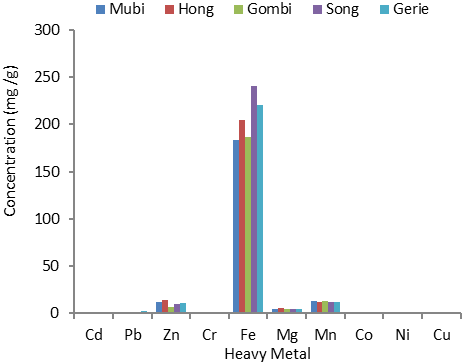
Figure 1: Heavy Metal Concentration for the Study Area
Table 2: Pollution Index (PI) for Heavy Metals in Roadside Surface Soil for Each Sampling Site
|
Heavy Metals |
Mubi |
Hong |
Gombi |
Song |
Gerei |
|
Cd |
0.29 |
0.3 |
0.37 |
0.17 |
0.24 |
|
Pb |
3.44 |
2.67 |
2.5 |
7.5 |
12.67 |
|
Zn |
0.8 |
0.91 |
0.45 |
0.65 |
0.74 |
|
Cr |
0.14 |
0.06 |
0.44 |
0.09 |
0.18 |
|
Fe |
4.45 |
5.11 |
4.67 |
6.02 |
5.51 |
|
Mg |
0.28 |
0.36 |
0.33 |
0.31 |
0.33 |
|
Mn |
25.64 |
24.44 |
25.78 |
24.47 |
23.27 |
|
Co |
7.8 |
6.6 |
8 |
7.9 |
9.8 |
|
Ni |
13 |
5.33 |
8.34 |
9.5 |
13.84 |
|
Cu |
0.22 |
0.18 |
0.21 |
0.19 |
0.21 |
DISCUSSION
Assessment of Metal Contaminations
The level of contaminations of heavy metals in roadside soils was assessed by contamination indices: Pollution Index (PI), Degree of Contamination (CD), Pollution Load Index (PLI), Geo-accumulation index (I-geo) and Enrichment factor (EF).
Pollution index (PI)
The concentrations of heavy metal in soil are influence by various sources such as anthropogenic and naturally. Thus, a pollution index (PI) was applied to the data set to discover possible sources that might influence different distribution of elements over the study area along Mubi-Yola highway.
The result showed that all the sites suffer heavy pollution at PI>3 of these heavy metals Pb, Fe, Mn, Co and Ni with the exception of sites Hong and Gombi which showed medium pollution of Pb at 2<PI<3 as a result of anthropogenic activities such as automobile exhaust and vehicular emission. However, the study area considered unpolluted at PI<1 with these metals Cd, Zn, Cr, Mg and Cu (Table 2) [30,35].
Degree of Contamination (CD)
The result of degree of contamination by heavy metals in the sites were: 56.06, 45.96, 51.09, 56.8 and 66.79 for Mubi, Hong, Gombi, Song and Gerei, respectively (Figure 2) which showed that all the sites were very highly contaminated at CD>20. Similar thing was reported by Taofeek and Tolulope [28].
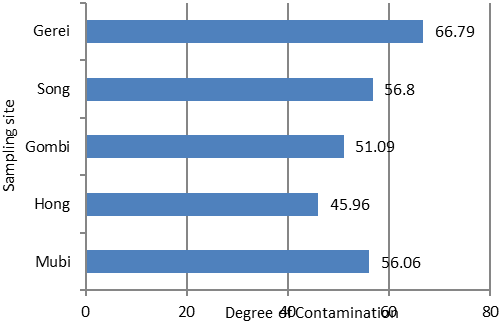
Figure 2: Degree of Contamination (CD) for the Ten Metals Studied in Each Site
Pollution Load Index (PLI)
To compare effectively whether the five sites suffer contamination or not, the PLI was used to assess the extent of metal pollution. The PLI is aimed at providing a measure of the degree of overall contamination at a sampling site. The result of the degree of contamination by the ten metals were of the order Gerei>Mubi>Song>Gombi>Hong (Figure3). All the sites showed sign of pollution or deterioration of site quality at PLI>1. The slight pollution at studied site suggested that input from anthropogenic sources attributed to increase in human activities and/or vehicular emissions. These sites connecting a good number of settlements, having higher populations and the road is frequently used by commercial trucks for transportation of goods to and from Mubi (being a commercial town at the border and having the largest cattle market in West Africa) and other states and countries in West Africa.
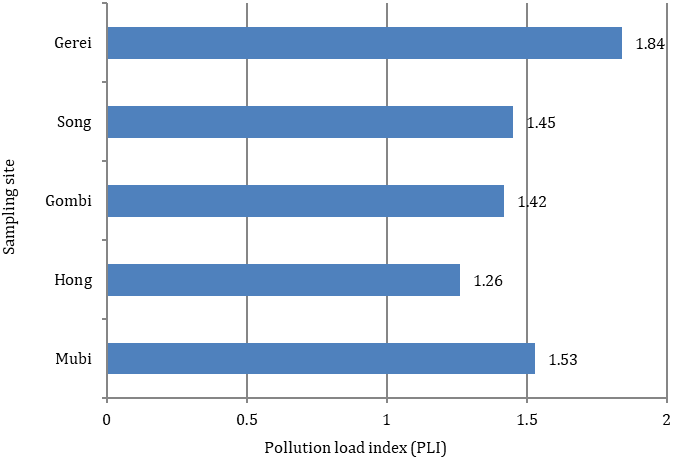
Figure 3: Pollution Load Index (PLI) for the Ten Metals Studied in Each Site
Enrichment Factor
Based on the result presented in Figure 4 the metals were deficiently to minimal enriched at EF<2, which was in line with the report of Mafuyai et al. [29]. However, Fe was moderate enriched at 2≤EF<5 while Mn was very high enriched at 20≤EF<40 this collaborates the report of Mmolawa et al. [36].
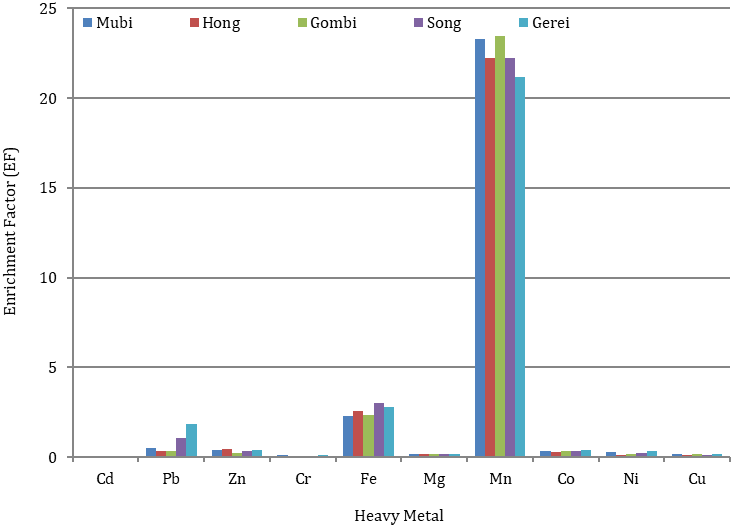
Figure 4: Enrichment Factor for Heavy Metals in Surface Soil Along Mubi-Yola Highway
Geo-Accumulation Index (Igeo)
The results of the calculated geo-accumulation index (Igeo) were presented in Figure 5 which revealed that all the sites showed strongly to extremely contaminated at Igeo 4-5 of Mn with the exception of Gerei which show strongly contaminated at Igeo 3-4 of Mn and Pb, while Song and Mubi showed moderately to strongly contamination at Igeo 2-3 and moderately contaminated at Igeo 1-2 of Pb respectively. Hong and Gombi were uncontaminated to moderately contaminated at Igeo 0-1 of Pb. Also all the sites showed moderately contamination at Igeo 1-2 of Fe with the exception of Song which showed moderately to strongly contaminated at Igeo 2-3. Similarly all the sites showed moderately to strongly contaminated at Igeo2-3 of Co. In the same vein Mubi and Gerei showed strongly contaminated at Igeo 3-4 of Ni whereas Gombi and Song suffer moderately to strongly contaminated at Igeo 2-3 and Hong moderately contaminated at Igeo1-2 of same. Figure 5 further revealed that the study sites were uncontaminated with Cd, Zn, Cr, Mg and Cu at Igeo<0.
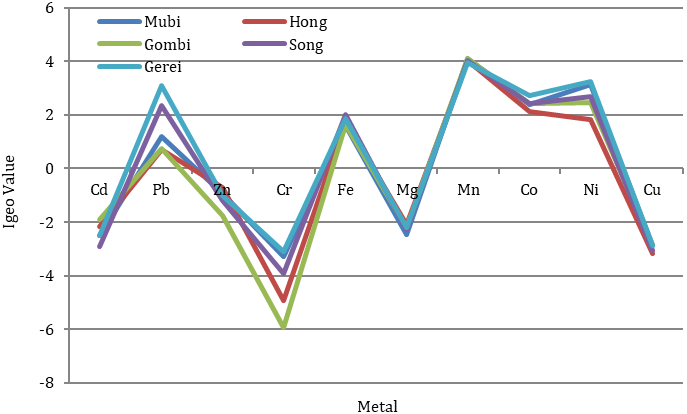
Figure 5: Geo-Accumulation Index (Igeo) of Heavy Metals Along Mubi-Yola Highway
CONCLUSIONS
The pollution index showed that Pb, Fe, Mn, Ni and Co pollution is relatively high in the study area as a result of automobile emission. The PLI showed deterioration of sites quality. Enrichment factor also showed that most of the elements are deficiently to minimal enriched. Igeo revealed that some of the study areas were strongly to extremely contaminate.
The increasing anthropogenic influences on the environment, especially pollution loadings, have caused negative changes in natural ecosystems, decreased biodiversity, simplified structure and lowered productivity. Consequently, it is imperative to continually assess and monitor the levels of heavy metals in the environment due to anthropogenic activities for evaluation of human exposure and for sustainable environment.
REFERENCES
- Zeng, H. “Advance in Study on Effects of Traffic and Transportation on Soil and Plants at Both Sides of Road.” Journal of Meteorology and Environment, vol. 24, 2008, pp. 52-55.
- Chen, X. et al. “Heavy Metal Concentrations in Roadside Soils and Correlation with Urban Traffic in Beijing, China.” Journal of Hazardous Materials, vol. 18, 2010, pp. 640-646.
- Singh, M.R. “Impurities-Heavy Metals: IR Perspective.” 2009.
- Mcintyre, T. “Phytoremediation of Heavy Metals from Soils.” Advances in Biochemical Engineering/Biotechnology, vol. 78, 2003, pp. 97-123.
- Kabata, P. and H. Pendias. Trace Metals in Soils and Plants. 2nd ed., CRC Press, 2010.
- Pierzynski, M.G. et al. Soils and Environmental Quality. 2nd ed., CRC Press, 2000.
- Paul, B.T. et al. “Heavy Metals Toxicity and the Environment.” EXS, vol. 101, 2012, pp. 133-164. https:// doi.org/10.1007/978-3-7643-8340-4_6.
- Bradl, H. Heavy Metals in the Environment: Origin, Interaction and Remediation. Vol. 6, Academic Press, 2002.
- Jose, A.A. et al. “Identification of Heavy Metal Sources by Multivariable Analysis in a Typical Mediterranean City (SE Spain).” Environmental Monitoring and Assessment, 2009.
- Radmila, N.P. et al. “Assessment of Soil and Plant Contamination by Select Heavy Metals Along a Major European Highway.” Polish Journal of Environmental Studies, vol. 22, no. 5, 2013, pp. 1465-1472.
- Hamelink, J.L. et al. Bioavailability: Physical, Chemical and Biological Interactions. CRC Press, 1994.
- Verkleji, J. “The Effects of Heavy Metals Stress on Higher Plants and Their Use as Biomonitors.” Plants as Bioindicators: Indicators of Heavy Metals in the Terrestrial Environment, edited by B. Markert, VCH, 1993, pp. 415-424.
- Suzuki, T.Y. and Y. Ono. “Roadside Rhododendron pulchrum Leaves as Bioindicators of Heavy Metal Pollution in Traffic Areas of Okayama, Japan.” Environmental Monitoring and Assessment, vol. 149, 2008, pp. 133-141.
- Siti, N.M.R. et al. “Analysis and Pollution Assessment of Heavy Metal in Soil, Perlis.” The Malaysian Journal of Analytical Sciences, vol. 18, 2014, pp. 155-161.
- Atayese, M.O. et al. “Heavy Metal Contamination of Amaranthus Grown Along Major Highways in Lagos.” African Crop Science Journal, vol. 16, 2009, pp. 225-235.
- Chronopoulos, J. et al. “Variations in Plant and Soil Lead and Cadmium Content in Urban Parks in Athens, Greece.” Science of the Total Environment, vol. 196, 1997, pp. 91-98.
- Lane, T.W. et al. “Biochemistry: A Cadmium Enzyme from a Marine Diatom.” Nature, vol. 435, 2005.
- Reena, S. et al. “Heavy Metals and Living Systems: An Overview.” Indian Journal of Pharmacology, vol. 43, no. 3, May-June 2011, pp. 246-253. https://doi.org/10.4103/02 53-7613.81505.
- Viard, B. et al. “Integrated Assessment of Heavy Metal (Pb, Zn, Cd) Highway Pollution: Bioaccumulation in Soil, Graminaceae and Land Snails.” Chemosphere, vol. 55, 2004, pp. 1349-1359.
- Hjortenkrans, D. et al. “New Metal Emission Patterns in Road Traffic Environments.” Environmental Monitoring and Assessment, vol. 117, 2006.
- Nabulo, G. et al. “Assessment of Lead, Cadmium and Zinc Contamination of Roadside Soils, Surface Films and Vegetables in Kampala City, Uganda.” Environmental Research, vol. 101, 2006, pp. 42-52.
- Wang, X.S. et al. “Accumulation and Sources of Heavy Metals in Urban Topsoil: A Case Study from the City of Xuzhou, China.” Environmental Geology, vol. 48, 2005.
- Wang, X.S. “Correlations between Heavy Metals and Organic Carbon Extracted by Dry Oxidation Procedure in Urban Roadside Soils.” Environmental Geology, vol. 54, 2008.
- Dekimple, C.R. and J.F. Morel. “Urban Soil Management: A Growing Concern.” Soil Science, vol. 165, 2000, pp. 31-40.
- Manta, D.S. et al. “Heavy Metal in Urban Soils: A Case Study from the City of Palermo (Sicily), Italy.” Science of the Total Environment, vol. 300, 2002, pp. 229-243.
- Addo, A.M. et al. “Evaluation of Heavy Metals Contamination of Soil and Vegetation in the Vicinity of a Cement Factory in the Volta Region, Ghana.” International Journal of Science and Technology, vol. 2, no. 1, 2012, pp. 20-25.
- Meneses, M. et al. “Monitoring Metals in the Vicinity of Municipal Waste Incinerator: Temporal Variation in Soils and Vegetation.” Science of the Total Environment, vol. 226, 1999, pp. 217-227.
- Taofeek, A.Y. and O.O. Tolulope. “Evaluation of Some Heavy Metals in Soils Along a Major Road in Ogbomoso, South West Nigeria.” Journal of Environment and Earth Science, vol. 2, no. 8, 2012.
- Mafuyai, M.G. et al. “Heavy Metal Contamination in Roadside Dust Along Major Traffic Roads in Jos Metropolitan Area, Nigeria.” European Journal of Earth and Environment, 2015.
- Joshua, O. et al. “Trace Metals in Soil and Plants around a Cement Factory in Pretoria, South Africa.” Polish Journal of Environmental Studies, vol. 24, no. 5, 2015, pp. 2087-2093. https://doi.org/10.15244/pjoes/43497.
- Barbreiri, M. “The Importance of Enrichment Factor (EF) and Geoaccumulation Index (Igeo) to Evaluate the Soil Contamination.” Journal of Geology and Geophysics, vol. 5, 2016. https://doi.org/10.4172/2381-8719.1000237.
- Chimuka, L. et al. “Metals in Environmental Media: A Study of Trace and Platinum Group Metals in Thohoyandou, South Africa.” Water SA, vol. 31, no. 4, 2005, pp. 581-588.
- Alexander, P. “Assessment of Heavy Metals in Roadside Surface Soil and Vegetation Along Mubi-Michika Road in Adamawa State, Nigeria.” International Journal of Applied Science and Biotechnology, vol. 3, no. 3, 2015, pp. 545-551. https://doi.org/10.3126/ijasbt.v3i3.12934.
- Bamgbose, O. et al. “Earthworms as Bioindicators of Metal Pollution in Dumpsite of Abeokuta, Nigeria.” Revista de Biología Tropical, vol. 48, no. 1, 2000.
- Li, M.S. and S.X. Yang. “Heavy Metal Contamination in Soils and Phytoaccumulation in a Manganese Mine Wasteland, South China.” Air, Soil and Water Research, vol. 1, 2008.
- Mmolawa, K.B. et al. “Reconnaissance of Heavy Metal Distribution and Enrichment around Botswana.” Fifth International Conference on Environmental Science and Technology, Houston, Texas, USA, 2010.