
International Journal of Clinical and Medical Research
ISSN Print: N/A
ISSN Online: 3134-8831
About: International Journal of Clinical and Medical Research (IJCMR) is an open-access, peer-reviewed journal dedicated to the publication of high-quality research in the field of clinical and medical sciences. The journal aims to provide a platform for researchers, clinicians, and healthcare professionals to share knowledge, exchange ideas, and promote scientific advancement in healthcare.
Publisher Responsibility
Lumina Quest Publishing is responsible for providing the journal with the necessary publishing infrastructure, editorial support, production services, digital preservation, and dissemination of published content. The publisher supports transparent and ethical publishing practices and ensures that the journal’s publishing operations are conducted in accordance with applicable scholarly publishing standards.
The publisher is also responsible for maintaining the journal’s website, publication systems, archiving arrangements, and administrative support while respecting the independence of editorial decision-making.
Editorial Responsibility
The Editor-in-Chief and Editorial Board are responsible for maintaining the academic and scientific quality of the journal. The editorial team oversees the evaluation of submitted manuscripts, selection and coordination of peer reviewers, editorial assessment and decisions, and adherence to the journal’s scope and ethical standards.
Editorial decisions are made independently on the basis of academic quality, originality, methodological soundness, relevance, and ethical compliance, without inappropriate influence from the publisher, authors, reviewers, or commercial interests.
Editorial Independence
The editorial team maintains editorial independence in all decisions concerning manuscript evaluation, peer review, acceptance, revision, and rejection. The publisher does not interfere with the academic judgment of editors or reviewers.
International Journal of Clinical and Medical Research | Year 2026 | Volume 3 | Issue 1 | Pages 27-33
Client Satisfaction With Sexually Transmitted Infection (STI) Services and Its Determinants: A Cross-Sectional Study
Naglaa Ahmed Abdellatif Ginawi 1*1Academic Affairs hail Health Cluster Quality Department, University of Hail, Saudia Arabia
View PDF Download XML Download DOI XML DOI: 10.66590/ijcmr2026030104
Abstract
Background: Sexually Transmitted Infections (STIs) remain an important public-health concern because of their effects on sexual and reproductive health, quality of life and transmission within communities. The effectiveness of STI services depends not only on appropriate diagnosis and treatment but also on the extent to which services are accessible, confidential, respectful, acceptable and responsive to client needs. Client satisfaction is increasingly recognized as an important indicator of healthcare quality because satisfied clients may be more likely to return for follow-up, disclose relevant information, adhere to treatment and recommend services to others. However, concerns regarding stigma, privacy, confidentiality, waiting time, communication and staff attitudes may influence experiences in STI clinics. Objective: To assess client satisfaction with STI services and identify demographic, clinical, provider-related and facility-related factors associated with satisfaction among clients attending an STI clinic. Methods: A facility-based cross-sectional study was designed among adult clients attending an STI clinic for consultation, testing, treatment, or follow-up. Data were collected using a structured questionnaire containing demographic characteristics and domains assessing accessibility, waiting time, communication, privacy, confidentiality, staff attitude, information provided, involvement in care, cleanliness, treatment and overall satisfaction. Satisfaction was assessed using a five-point Likert scale. Overall satisfaction was categorized according to a predefined composite score. Factors associated with satisfaction were examined using chi-square tests and multivariable logistic regression. The numerical results presented in this manuscript are illustrative and are intended to demonstrate the format and analytical approach; they must be replaced with actual study data before publication. Illustrative Results: Among 250 hypothetical clients, 207 (82.8%) reported overall satisfaction with the STI services. The highest satisfaction was observed for confidentiality, privacy during consultation, provider communication and staff respect. Lower satisfaction was observed for waiting time, waiting-area facilities, availability of health information and involvement in treatment decisions. In multivariable analysis, respectful provider communication, perceived confidentiality, shorter waiting time, adequate explanation of treatment and involvement in clinical decisions were independently associated with higher satisfaction. Conclusion: Client satisfaction with STI services is influenced by both interpersonal and organizational characteristics. Maintaining confidentiality, respectful communication, adequate information, shorter waiting times and client involvement in care may substantially improve the quality and acceptability of STI services. Routine use of client-reported experience measures could help STI clinics identify service gaps and guide quality-improvement interventions.
INTRODUCTION
Sexually transmitted infections represent a major global health challenge and continue to affect individuals across different age groups and populations. STIs can cause acute symptoms, reproductive complications, infertility, adverse pregnancy outcomes, neonatal disease and increased vulnerability to HIV acquisition and transmission [1,2]. The World Health Organization (WHO) has therefore emphasized the need for accessible, acceptable, high-quality STI prevention, testing, treatment and care services [1].
The quality of STI services cannot be evaluated solely according to laboratory outcomes or treatment success. The experience of clients is also an important component of healthcare quality. Clients seeking STI services may have concerns that are different from those encountered in routine outpatient care. Fear of stigma, embarrassment, concerns about disclosure, anxiety regarding diagnosis and fear of judgment may influence willingness to seek care and communicate openly with healthcare professionals [3,4].
Confidentiality and privacy are particularly important in sexual-health services. Clients may be reluctant to disclose sexual histories or symptoms if they believe that personal information could be revealed to family members, partners, community members, or other healthcare workers without permission. A qualitative study of clients attending a community STI service found that the clinic environment influenced experiences of stigma, while easy access to services contributed to acceptability of community-based STI care [5].
Client satisfaction is a multidimensional concept that reflects the degree to which healthcare experiences meet or exceed patient expectations. It may include satisfaction with provider communication, technical competence, accessibility, waiting time, privacy, confidentiality, cleanliness, information, treatment and the physical environment.
A systematic review specifically examining satisfaction in STI clinics found considerable variation in the methods used to measure satisfaction and identified several recurring themes considered important by clients. These included convenient clinic location, availability of appointments, staff attitude, effective provision of information and maintenance of confidentiality [6].
The absence of a universally accepted measurement instrument was also highlighted by Weston et al. [6]. Subsequently, Weston and colleagues developed and validated a patient-satisfaction survey specifically for sexual-health clinic attendees. Their questionnaire incorporated five major patient-derived themes and demonstrated high completion, internal consistency and validity [7].
Evidence from individual STI clinics suggests that overall satisfaction can be relatively high while important service deficiencies remain. Padhiar and Karia conducted a cross-sectional study among 88 STI-clinic attendees and reported high overall satisfaction, but waiting time and waiting-area facilities were among the weaker domains [8]. Their findings also indicated high levels of satisfaction with doctor-patient communication, privacy, confidentiality and cleanliness.
Similarly, Mehta et al. examined 499 patients attending public STD clinics and found that satisfaction was associated with modifiable provider and clinic characteristics. Lower ratings of clinician technical skills and the clinic environment were associated with poorer overall healthcare ratings, while receiving written information was associated with better perceptions of care [9].
These findings demonstrate that client satisfaction is not determined solely by demographic characteristics. Provider communication, perceived technical competence, clinic environment, accessibility and information provision may be more important determinants.
WHO’s recent recommendations on STI service delivery further emphasize people-centred care, including decentralization, integration, task sharing and digital approaches to improve access and quality of STI services [1]. WHO’s evidence review indicates that convenient and nearby facilities are generally associated with positive experiences, although privacy and confidentiality remain important concerns [10].
Despite this evidence, client satisfaction remains insufficiently assessed in many STI services, particularly in settings where STI clinics serve diverse populations and face limitations in staffing, infrastructure and privacy.
Therefore, the present study was designed to assess client satisfaction with STI services and identify the factors associated with satisfaction.
Objectives
Primary Objective: To assess the level of client satisfaction with STI services among patients attending an STI clinic.
Secondary Objectives
- To assess satisfaction with different dimensions of STI care
- To evaluate client perceptions of privacy and confidentiality
- To assess satisfaction with healthcare-provider communication and attitude
- To determine satisfaction with waiting time and clinic accessibility
- To identify demographic factors associated with client satisfaction
- To identify provider- and facility-related predictors of satisfaction
- To identify areas requiring improvement in STI service delivery
Research Questions
- What proportion of clients are satisfied with the STI services they receive
- Which aspects of STI care receive the highest and lowest satisfaction ratings
- Is client satisfaction associated with age, sex, education, or previous STI-clinic experience
- Are privacy and confidentiality associated with overall satisfaction
- Does provider communication influence overall client satisfaction
- Does waiting time influence satisfaction
- Which factors independently predict overall satisfaction
MATERIALS AND METHODS
Study Design
A facility-based cross-sectional study design was used to assess client satisfaction with STI services.
Study Setting
The study should be conducted in an STI/sexual-health clinic providing consultation, STI testing, treatment, counselling and follow-up services.
The setting should be described in the final manuscript according to the actual facility, including location, type of facility, patient volume, staffing structure and services available.
Study Population
The study population should comprise clients attending the STI clinic for:
- STI consultation
- STI testing
- treatment
- follow-up
- partner-related services
- sexual-health counselling
Eligibility Criteria
Inclusion Criteria: Participants should:
- Be adults attending the STI clinic
- Have received or be receiving STI-related services
- Be able to understand the study questionnaire
- Provide informed consent
Exclusion Criteria
Clients may be excluded if they:
- Are unable to complete the questionnaire
- Are acutely unwell and require immediate medical care
- Have already participated during the same study period
- Decline participation
Data Collection Instrument
A structured questionnaire should be developed using established patient-satisfaction domains identified in previous STI research, including provider communication, information provision, confidentiality, privacy, accessibility, waiting time, clinic environment and overall satisfaction [6–9].
A five-point Likert scale can be used:
- Very dissatisfied
- Dissatisfied
- Neither satisfied nor dissatisfied
- Satisfied
- Very satisfied
The questionnaire should include the following domains.
Domain 1: Accessibility
- Ease of reaching the clinic
- Convenience of clinic location
- Ease of obtaining an appointment
- Clinic operating hours
Domain 2: Waiting time
- Registration time
- Waiting time before consultation
- Waiting time for testing
- Waiting time for treatment
Domain 3: Provider Communication
- Provider listened carefully
- Explanation was understandable
- Questions were answered
- Provider showed respect
- Provider demonstrated confidence and competence
Domain 4: Privacy and Confidentiality
- Privacy during consultation
- Privacy during examination
- Confidentiality of personal information
- Confidential handling of test results
- Protection from being recognized or overheard
Domain 5: Information and Counselling
- Explanation of diagnosis
- Explanation of treatment
- Explanation of medication
- Advice regarding prevention
- Partner-related information
- Follow-up instructions
Domain 6: Clinic Environment
- Cleanliness
- Comfort of waiting area
- Availability of seating
- Overall appearance
- Safety
- Privacy of the physical environment
Domain 7: Overall Satisfaction
- Overall quality of care
- Satisfaction with STI services
- Willingness to return
- Willingness to recommend the service
These domains are consistent with themes identified in STI satisfaction research [6–9].
Measurement of Client Satisfaction
Each questionnaire item should be assigned a score from 1 to 5. A composite satisfaction score can be calculated by summing the scores across all relevant items and converting the result into a percentage.
For Example:
Satisfaction percentage = (Observed score/Maximum possible score) × 100
For the primary analysis, satisfaction may be classified as:
- Satisfied: ≥75%
- Not satisfied: <75%
The threshold must be specified before analysis and should preferably be justified by the selected validated instrument or by the study protocol.
For stronger methodology, the final study should evaluate the questionnaire’s internal consistency using Cronbach’s alpha.
Statistical Analysis
Data should be entered into SPSS, Stata, R, or another appropriate statistical program. Continuous variables should be reported as mean ± standard deviation or median with interquartile range. Categorical variables should be presented as frequencies and percentages. The association between categorical variables and satisfaction should be examined using the chi-square test or Fisher’s exact test. Variables associated with satisfaction in bivariate analysis should be considered for multivariable logistic regression. Adjusted odds ratios (aORs), 95% Confidence Intervals (CIs) and p-values should be reported. A two-sided p-value<0.05 should be considered statistically significant. The final study should also assess questionnaire reliability using Cronbach’s alpha and, if appropriate, explore the underlying domains using factor analysis.
RESULTS
Important
The following results are illustrative only. They are not real observations and must be replaced with your actual study data before submission to a journal.
Participant Characteristics
For demonstration, a hypothetical sample of 250 STI-clinic clients was used (Table 1).
Table 1: Illustrative Demographic and Clinical Characteristics of Participants
|
Characteristic |
n (%) |
|
Total participants |
250 (100) |
|
Age 18–24 years |
62 (24.8) |
|
Age 25–34 years |
108 (43.2) |
|
Age 35–44 years |
52 (20.8) |
|
Age ≥45 years |
28 (11.2) |
|
Male |
134 (53.6) |
|
Female |
116 (46.4) |
|
Secondary education or less |
96 (38.4) |
|
College/university education |
154 (61.6) |
|
First STI-clinic visit |
168 (67.2) |
|
Previous STI-clinic visit |
82 (32.8) |
|
STI symptoms present |
182 (72.8) |
|
Asymptomatic/testing visit |
68 (27.2) |
Overall, Client Satisfaction
In the illustrative dataset, 207 of 250 participants (82.8%) were classified as satisfied with the overall STI service, whereas 43 (17.2%) were classified as not satisfied.
The highest satisfaction was observed for confidentiality, privacy during consultation, provider respect and provider communication. Lower satisfaction was observed for waiting time, waiting-area facilities and involvement in decisions regarding care (Table 2).
Table 2: Illustrative Client Satisfaction by Service Domain
|
Service domain |
Satisfied n (%) |
Not satisfied n (%) |
|
Accessibility |
202 (80.8) |
48 (19.2) |
|
Waiting time |
161 (64.4) |
89 (35.6) |
|
Provider communication |
221 (88.4) |
29 (11.6) |
|
Provider respect |
225 (90.0) |
25 (10.0) |
|
Privacy during examination |
230 (92.0) |
20 (8.0) |
|
Confidentiality |
233 (93.2) |
17 (6.8) |
|
Explanation of treatment |
211 (84.4) |
39 (15.6) |
|
Counselling |
198 (79.2) |
52 (20.8) |
|
Clinic cleanliness |
218 (87.2) |
32 (12.8) |
|
Waiting-area facilities |
165 (66.0) |
85 (34.0) |
|
Involvement in decisions |
185 (74.0) |
65 (26.0) |
|
Overall satisfaction |
207 (82.8) |
43 (17.2) |
These illustrative patterns are broadly consistent with previous STI-clinic studies in which confidentiality, privacy, provider communication and clinical interaction were rated highly, whereas waiting time and physical facilities were comparatively weaker domains [8].
Factors Associated with Client Satisfaction
In the illustrative multivariable model, provider communication, perceived confidentiality, shorter waiting time and adequate treatment explanation were independently associated with overall satisfaction (Table 3, Figure 1).
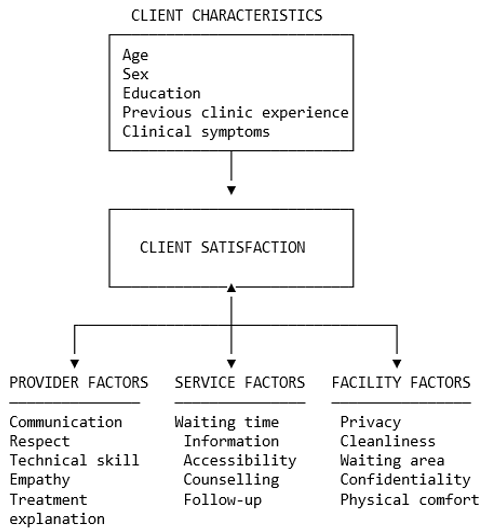
Figure 1: Conceptual Framework Showing Potential Determinants of Client Satisfaction with STI Services
Table 3. Illustrative predictors of overall satisfaction
|
Predictor |
Satisfied n/N (%) |
Adjusted OR (95% CI) |
p-value |
|
Age ≥25 years |
161/188 (85.6) |
1.42 (0.76–2.66) |
0.27 |
|
Age 18–24 years |
46/62 (74.2) |
Reference |
— |
|
Previous clinic visit |
73/82 (89.0) |
1.68 (0.86–3.28) |
0.13 |
|
First clinic visit |
134/168 (79.8) |
Reference |
— |
|
Good provider communication |
193/211 (91.5) |
3.74 (1.69–8.27) |
0.001 |
|
Poor/moderate communication |
14/39 (35.9) |
Reference |
— |
|
High confidentiality rating |
199/217 (91.7) |
3.21 (1.39–7.39) |
0.006 |
|
Lower confidentiality rating |
8/33 (24.2) |
Reference |
— |
|
Waiting time <30 min |
151/166 (91.0) |
2.63 (1.30–5.31) |
0.007 |
|
Waiting time ≥30 min |
56/84 (66.7) |
Reference |
— |
|
Adequate treatment explanation |
182/205 (88.8) |
2.45 (1.19–5.05) |
0.015 |
|
Inadequate explanation |
25/45 (55.6) |
Reference |
— |
DISCUSSION
The illustrative findings indicate that client satisfaction with STI services may be relatively high overall while substantial differences remain between individual service domains. In particular, privacy, confidentiality, provider communication and respectful treatment may receive higher satisfaction ratings, whereas waiting time and physical facilities may represent more important areas for improvement.
This pattern is consistent with previous research. Padhiar and Karia reported high satisfaction among STI-clinic attendees, with particularly favorable ratings for doctor-patient communication, privacy, confidentiality, cleanliness and trust in the treating physician [8]. However, waiting time and waiting-area facilities were comparatively weaker aspects of the service.
The importance of confidentiality is particularly understandable in STI services. Patients may fear social stigma, relationship difficulties, discrimination, or disclosure of sensitive information. Consequently, confidentiality is not simply an administrative requirement but a fundamental component of client-centred sexual healthcare.
The systematic review by Weston et al. identified maintenance of confidentiality, staff attitude, effective information provision and convenience as recurring priorities among STI-clinic clients [6]. These findings support the use of these domains in satisfaction questionnaires and indicate that STI clinics should assess patient experience beyond clinical treatment outcomes.
Provider communication emerged as an important illustrative predictor of satisfaction. Effective communication can reduce anxiety, improve understanding of diagnosis and treatment, encourage appropriate disclosure of sexual history and improve client participation in care. Conversely, poor communication may increase uncertainty and dissatisfaction even when technically appropriate treatment is provided.
Mehta et al. found that provider and clinic characteristics were associated with patient satisfaction in public STD clinics [9]. Lower ratings of clinician technical skills and the clinic environment were associated with poorer overall ratings, while written information was associated with better perceptions of care.
This suggests that satisfaction is multidimensional and cannot be improved by addressing only one aspect of care.
Waiting time was another important potential determinant. Long waiting periods may be particularly problematic for STI clients because some may prefer discreet, rapid services due to concerns about being recognized by acquaintances or being seen waiting in a sexual-health clinic. In addition, long waiting times may create perceptions that the service is poorly organized.
The physical environment may also influence satisfaction. Overcrowded waiting areas, inadequate seating, poor signage, lack of privacy, or insufficient separation between registration and clinical areas may increase anxiety and compromise confidentiality. A mystery-shopper study of sexual-health services identified problems with reception, waiting facilities, confidentiality and clinic accessibility, demonstrating that service experience can involve multiple organizational components rather than the clinical consultation alone [11].
The illustrative association between treatment explanation and satisfaction is also important. Clients need to understand the purpose of their treatment, how medications should be taken, possible adverse effects, the importance of completing therapy, prevention of reinfection, partner management and when follow-up is necessary. Effective communication therefore supports both satisfaction and clinical quality.
WHO’s current STI service-delivery recommendations emphasize people-centred approaches, including decentralization, integration, task sharing and digital health interventions designed to improve access and quality of STI care [1]. The evidence reviewed by WHO also indicates that convenient, nearby facilities are generally associated with positive care experiences, although privacy and confidentiality remain important concerns [10].
The findings have implications for service improvement. First, STI clinics should conduct regular client-experience assessments. Second, staff should receive communication and confidentiality training. Third, clinics should review patient flow to reduce unnecessary waiting. Fourth, physical arrangements should protect privacy during registration, consultation, examination and collection of test results. Fifth, written or electronic educational materials should be provided where appropriate.
An important consideration is that satisfaction should not be interpreted as a direct measure of clinical quality. A client may report being highly satisfied despite receiving inappropriate treatment, while another may be dissatisfied despite receiving technically excellent care because of a long waiting time. Therefore, client satisfaction should be assessed alongside clinical quality indicators, treatment adherence, appropriate guideline use, testing quality and health outcomes.
Implications for Clinical Practice
The findings support several practical interventions.
Strengthening Confidentiality
STI clinics should establish clear confidentiality procedures covering registration, consultation, examination, laboratory testing, electronic records and communication of results.
Improving Provider Communication
Healthcare workers should use respectful, non-judgmental communication and allow clients adequate opportunity to ask questions.
Reducing Waiting Time
Patient-flow analysis, appointment systems, triage and appropriate task sharing may reduce unnecessary delays.
Improving Information Provision
Clients should receive understandable information about diagnosis, treatment, prevention, partner management and follow-up.
Improving the Physical Environment
Waiting areas should provide adequate privacy, seating, cleanliness, ventilation and appropriate separation from general outpatient areas where possible.
Routine Patient-Experience Measurement
Short anonymous satisfaction questionnaires can be administered routinely and reviewed by clinic managers as part of continuous quality improvement.
Strengths and Limitations
The proposed study has several strengths. It assesses multiple dimensions of STI service experience rather than focusing exclusively on overall satisfaction. It also evaluates potentially modifiable determinants, including communication, privacy, waiting time, information provision and clinic environment.
However, several limitations should be acknowledged. First, a cross-sectional design cannot establish causal relationships between service characteristics and satisfaction. Second, satisfaction is subjective and may be influenced by expectations and previous healthcare experiences. Third, clients may provide socially desirable responses if questionnaires are administered within the clinic. Fourth, patients who refuse participation may differ systematically from participants. Fifth, a single-centre study may have limited generalizability.
To reduce these limitations, future studies should use anonymous questionnaires, validated patient-experience measures, multicentre sampling and mixed-method approaches incorporating qualitative interviews.
CONCLUSIONS
Client satisfaction represents an important component of quality STI service delivery. The available evidence indicates that satisfaction is influenced by multiple dimensions, particularly provider communication, staff attitude, confidentiality, privacy, information provision, accessibility, waiting time and the physical clinic environment [6–9].
The illustrative findings presented in this manuscript suggest that respectful communication, strong confidentiality practices, shorter waiting times and adequate explanations of treatment may be particularly important predictors of satisfaction. However, satisfaction should be evaluated together with objective measures of clinical quality rather than used as a substitute for them.
STI services should therefore adopt routine client-reported experience measurement as part of quality improvement. Protecting confidentiality, improving communication, reducing unnecessary waiting, providing understandable health information and creating a respectful environment may improve both the acceptability and perceived quality of STI services.
Future research should use validated STI-specific satisfaction instruments, multicenter designs and longitudinal approaches to determine whether improvements in client experience are associated with better treatment adherence, return for follow-up, partner notification and other important STI-care outcomes.
REFERENCES
- World Health Organization. Recommendations on the Delivery of Health Services for the Prevention and Care of Sexually Transmitted Infections. World Health Organization, 2025.
- World Health Organization. Global Health Sector Strategies on, Respectively, HIV, Viral Hepatitis and Sexually Transmitted Infections for the Period 2022–2030. WHO, 2022.
- World Health Organization. Global Progress Report on HIV, Viral Hepatitis and Sexually Transmitted Infections, 2021. WHO, 2021.
- World Health Organization. Guidelines for the Management of Symptomatic Sexually Transmitted Infections. WHO, 2021.
- Napierala Mavedzenge, S. et al. “Effectiveness of HIV prevention for adolescents and young people: A systematic review.” Sexually Transmitted Infections, vol. 90, 2014, pp. 199–209.
- Weston, R. et al. “Measuring patient satisfaction in sexually transmitted infection clinics: A systematic review.” Sexually Transmitted Infections, vol. 85, no. 6, 2009, pp. 459–467. https://doi.org/10.1136/sti.2009.037358.
- Weston, R.L. et al. “Development of a validated patient satisfaction survey for sexual health clinic attendees.” International Journal of STD & AIDS, vol. 21, no. 8, 2010, pp. 584–590. https://doi.org/10.1258/ijsa.2010.010159.
- Padhiar, B.B. and U.K. Karia. “A study on satisfaction level among patients attending sexually transmitted infections clinic.” Indian Journal of Sexually Transmitted Diseases and AIDS, vol. 41, no. 1, 2020, pp. 63–67. https://doi.org/10.4103/ijstd.IJSTD_44_17.
- Mehta, S.D. et al. “Patient, provider and clinic characteristics associated with public STD clinic patient satisfaction.” Sexually Transmitted Infections, vol. 81, no. 2, 2005, pp. 150–154. https://doi.org/10.1136/sti.2003.009001.
- World Health Organization. Recommendations on the Delivery of Health Services for the Prevention and Care of Sexually Transmitted Infections: Web Annexes. WHO, 2025.
- Mercer, C.H. et al. “Look who’s taking notes in your clinic: mystery shoppers as evaluators in sexual health services.” Sexually Transmitted Infections, vol. 84, 2008, pp. 510–515.
- World Health Organization. Patient-Reported Experiences in Primary Care: Metrics and Assessment Tool. WHO, 2025.
- World Health Organization. Patient-Reported Experiences in Primary Care: Rapid Version. WHO, 2025.