

Advanced Research Journal of Computer Science
ISSN Print: N/A
ISSN Online: 3134-884X
About: The Advanced Research Journal of Computer Science (ARJCS) is a peer-reviewed, open-access journal dedicated to publishing high-quality research and review articles in the field of computer science. ARJCS serves as a global platform for researchers, academicians, and industry professionals to share innovative ideas, cutting-edge developments, and practical applications in computing and information technology.
Advanced Research Journal of Computer Science | Year 2025 | Volume 1 | Issue 1 | Pages 1-4
An IoT-Based Smart Monitoring System Usingthe ESP32Wi-Fi Module
Thamer M. Tuaimah 1*1Department of Computer Science, Al Mustansiriya University, Baghdad, Iraq
View PDF Download XML DOI: 10.66590/arjcs.2025.01.01.01
Abstract
The main objective of this system is to preserve the quality of food stored in warehouses by continuously monitoring environmental conditions such as temperature and humidity, as these directly affect human health. The system integrates both hardware and software components. The hardware includes a DHT11 sensor, buzzer, ESP32 module, and LCD display, while the software is developed using Arduino C. The system continuously monitors the warehouse environment and generates alerts whenever temperature or humidity exceeds a predefined threshold through the Wi-Fi module. The real-time temperature is displayed on the LCD, and a buzzer is triggered in case of abnormal temperature detection, particularly for rice storage. Furthermore, IoT technology is employed to transmit data from the ESP32 module to a Telegram bot, enabling the administrator to receive emergency alerts and issue control commands remotely.
Introduction
Food quality is currently a major issue for the industry. To ind quality problems during production, food businesses must employ quality monitoring systems. Because of data manipulation and centralized storage, conventional quality monitoring systems are unreliable. Traditional quality monitoring methods are ineffective due to a lack of automation. [1,2].
This article uses a microcontroller to talk about the internet of things and forthcoming technologies. It uses script programming and sensors. Also polluting is food waste. Food can be wasted during agricultural production, post-harvest handling, storage, food processing, distribution and consumption. This waste is a result of the inef iciencies and knowledge gaps throughout the food supply chain. The Internet of Things, big data-based solutions and other management techniques are utilized to decrease food waste in food supply chains [3]. This paper is organized as follows:
Related work in Section 2 and 3 presents the proposed model. Section 4 describes the experiments. The conclusion is in Section 5.
Related Work
The article proposes a food quality monitoring device that monitors environmental parameters like temperature, humidity, alcohol content and light in 2020. The device uses the Arduino UNO, a popular prototyping board. The Arduino board is connected to sensors like DHT-11 for temperature and humidity, MQ6 for alcohol content and LDR for light exposure. An IoT platform receives sensor data from this device [4].
In 2023, a similar food quality monitoring technology will measure ecological parameters like temperature, moisture, alcohol content and light exposure for fruits and vegetables. Arduino UNO interfaces with sensors like DHT- 22 to measure temperature and humidity, MQ3 to identify alcohol and LDR to measure direct light exposure. It feeds sensor data to an IoT system through the ESP8266 Wi-Fi Module. The IoT system will log and check sensing unit data, which will help monitor food storage from anywhere [5].
A similar food quality monitoring instrument will measure ecological parameters like temperature, moisture, alcohol content and light exposure for fruits and vegetables in 2023. Arduino UNO interfaces with sensors like DHT-22 to measure temperature and humidity, MQ3 to identify alcohol and LDR to measure direct light exposure. It feeds sensor data to an IoT system through the ESP8266 Wi-Fi Module. The IoT system will log and check sensing unit data, which will help monitor food storage from anywhere [6].
The poultry sector will bene it from feeding system automation in 2023. This work reduces chicken food waste compared to human feeding systems. Arduino, ultrasonic sensor, DC motor, RTC module and keypad create the automatic food feeder [7].
In 2021, Arduino controls sensor use in the suggested method. The result is presented on the LCD digital display's alphanumeric display module. Avoid eating low- quality meals with this method. Consumers, food inspectors and others can use the food adulteration observance system because of its ease [8,9].
They invented a machine to feed chickens in 2017 to solve the poultry industry's labor shortage and introduce a semi-automated procedure. Chicken feeding machines are controlled using Arduino Uno boards. An Arduino controls the servomotor from storage to the feeding container and another Arduino controls the chicken food's temperature sensor. This improves the coop's atmosphere, reduces labor costs, saves food and chicken feeding time, controls the chicken food's temperature sensor and prevents chicken faces and insects from contaminating the food.
Proposed System
Food warehouse monitoring uses a sender and receiver. The sender uses an ESP32 microcontroller, a DH11 temperature and humidity sensor, an LCD and some cables.
The Chabot in the Telegram app will receive noti ications and ask the sender about issues.
Hardware are:
• ESP32: The ESP32 is a powerful System on Chip (SoC) microcontroller with inbuilt Wi-Fi 802.11 b/g/n, dual-mode Bluetooth 4.2 and many peripherals. The 8266 chip's successor has two cores clocked at up to 240 MHz. Compared to its predecessor, it has 4MB of lash memory, 36 GPIO pins, 16 PWM channels and 17 to 36 GPIO pins [10]
• DH11:An 8-bit microprocessor outputs temperature and humidity information from the DHT11's dedicated NTC
• LCD: The Hitachi HD44780 driver-compatible LiquidCrystal library controls LCD displays. The 16- pin interface distinguishes many of them [11,12]
Software Components
Arduino sketches are created using the Arduino IDE. This IDE includes the console toolbar, text editor and message area.
System Work
Figure 1 displays the system's block diagram, which shows numerous devices coupled together as data inputs and outputs.
The sensor monitoring the environment, the signal will be sent to the microcontroller. The LCD displays DH11 temperature sensor and humidity values. An alert will notify the administrator if the temperature exceeds the limit via Wi-Fi module. Buzzer will be trigger when a problem occurs. LCD will display continually the states of the system.
When the admin sends a command or an emergency occurs, the ESP module sends data to the Telegram bot via IoT technology.
Figure 2 depicts the system circuit.
Results
This section discusses generic systems and IOT outcomes.
System Testing
The ESP32 board software is uploaded to test the system. Figure 3.
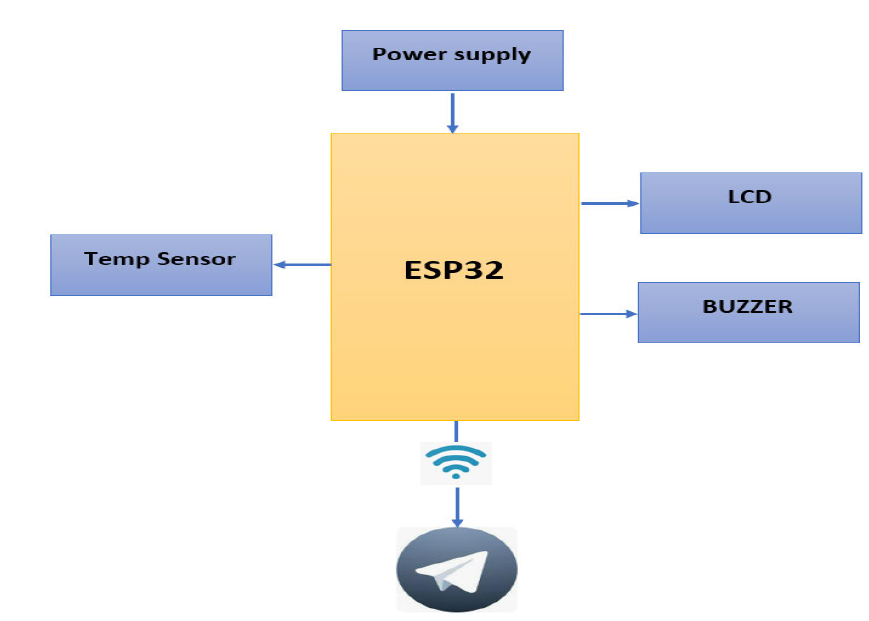
Figure 1: The System's Block Diagram
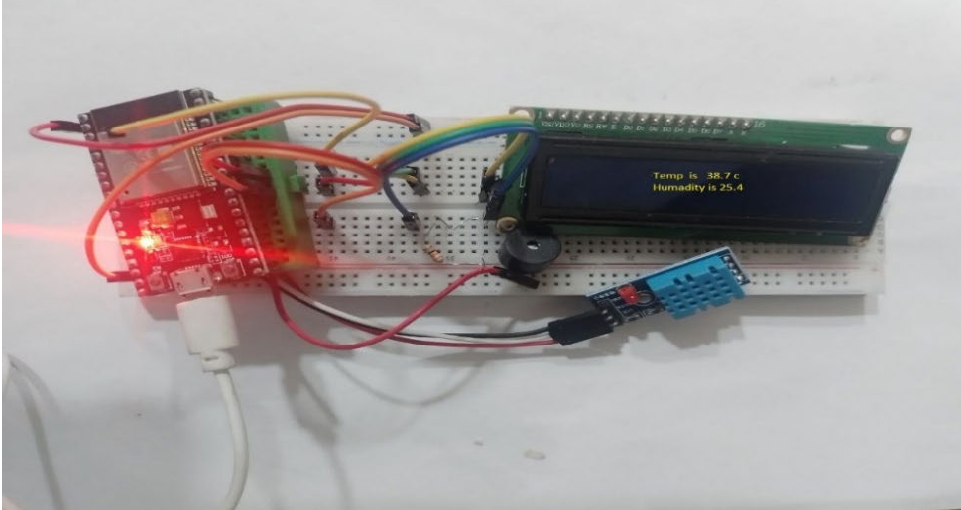
Figure 2: The System Circuit
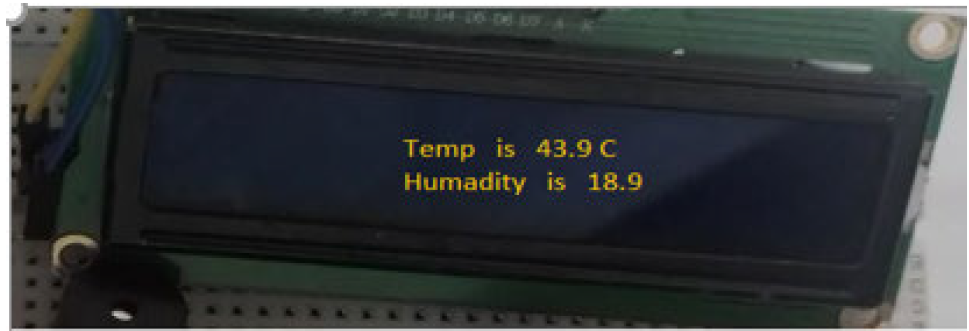
Figure 3: The Values of Temp and Humadity
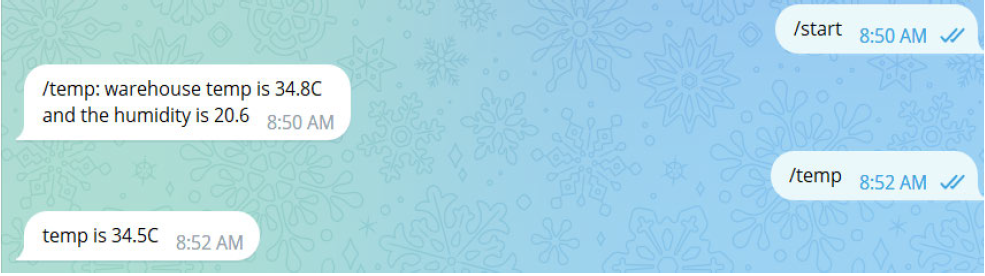
Figure 4: Monitoring Part System
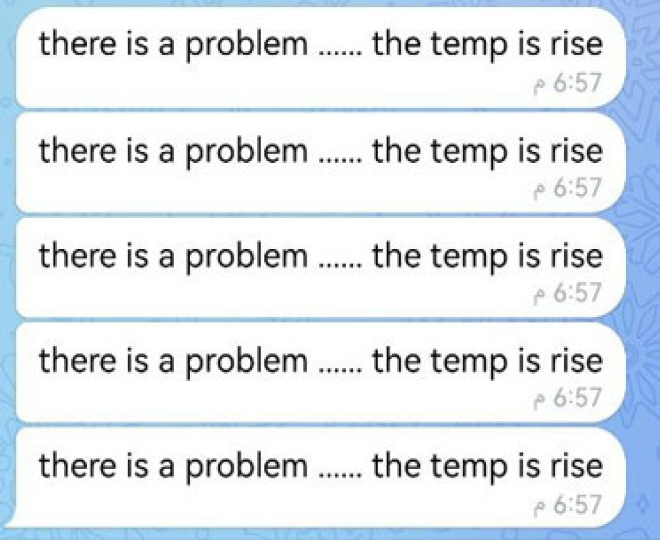
Figure 5: Alarm Message System
IOT Testing
ESP modules enable Wi-Fi internet connectivity. This system creates Chabot telegrams. The admin sends Telegram commands and the bot gets system data. The bot will notify you in emergencies. Figures 4 and 5 demonstrate the message alarm and admin inquiry. Table 1 lists bot telegram commands.
Conclusion
In this paper, an IOT smart system was created and implemented to monitor food warehouse storage. IOT technology allows the Chabot to remotely monitor the warehouse by sending a command message to the warehouse. If there's an emergency, like a high temperature, it'll transmit an alarm. The system has been tested and applied on a number of warehouses and the results appeared to be suitable for the requirements.
References
[1] Kumar, A. “An Arduino sensor-based approach for detecting the food spoilage.” International Journal of Engineering Applied Science and Technology, vol. 5, 2020, pp. 596–99.
[2] Ahmadzadeh, S. et al.“AComprehensive Review on Food Waste Reduction Based on IoT and Big Data Technologies.”Sustainability, vol. 15, no. 4, 2023, p. 3482.
[3] Arduino, I. et al. “Impact of Time-Temperature Combinations on the Anti-Cytomegalovirus Activity and Biological Components of Human Milk.” Pediatric Research, 2023, pp. 1–9.
[4] Wiradharma, R. “Design and Development of a Formalin Detection Tool in Arduino Uno-Based Meatball Soup.”Tech-E, vol. 6, no. 2, 2023, pp. 43–49.
[5] Chander, B.R. and G. Kumari. “Food Quality Monitoring System by Using Arduino.” Journal of Engineering Science, vol. 11, 2020, pp. 625–30.
[6] Deen, A.A.J. et al. Arduino Based Smart IoT Food Quality Monitoring System, 2023.
[7] Shankar Ganesh, A. et al. “Automatic Food Feeder for Poultry Industry Using Arduino.” Journal of Survey in Fisheries Sciences, vol. 10, no. 2S, 2023, pp. 1732–36.
[8] Perumal, B. et al. “Detection of Food Adulteration Using Arduino IDE.” 2021 Second International Conference on Electronics and Sustainable Communication Systems (ICESC), IEEE, 2021, pp. 262–67.
[9] Soh, Z.H. et al. “Development of automatic chicken feeder using Arduino Uno.” 2017 International Conference on Electrical, Electronics and System Engineering (ICEESE), IEEE, 2017, pp. 120–24.
[10] Babiuch, M. et al. “Using the ESP32 Microcontroller for Data Processing.” 2019 20th International Carpathian Control Conference (ICCC), IEEE, 2019, pp. 1–6.
[11] Boddu, R.D. et al. “IoT-Based Smart Agricultural Monitoring System.” Proceedings of Fourth International Conference on Computer and Communication Technologies, Springer, Singapore, 2023, pp. 377–85.
[12] Gabriel, M.M. and K.P. Kuria. “Arduino Uno, Ultrasonic Sensor HC-SR04 Motion Detector with Display of Distance in the LCD.” International Journal of Engineering Research and Technical Research, vol. 9, 2020.