
Journal of Advanced Biological Sciences
ISSN Print: N/A
ISSN Online: 3134-8823
About: Journal of Advanced Biological Sciences (JABS) is a peer-reviewed, open-access journal that aims to publish cutting-edge research and advancements in all areas of biological sciences. The journal serves as a platform for researchers, academicians, and professionals to contribute their scientific knowledge and foster innovation in biology-related fields.
Publisher Responsibility
Lumina Quest Publishing is responsible for providing the journal with the necessary publishing infrastructure, editorial support, production services, digital preservation, and dissemination of published content. The publisher supports transparent and ethical publishing practices and ensures that the journal’s publishing operations are conducted in accordance with applicable scholarly publishing standards.
The publisher is also responsible for maintaining the journal’s website, publication systems, archiving arrangements, and administrative support while respecting the independence of editorial decision-making.
Editorial Responsibility
The Editor-in-Chief and Editorial Board are responsible for maintaining the academic and scientific quality of the journal. The editorial team oversees the evaluation of submitted manuscripts, selection and coordination of peer reviewers, editorial assessment and decisions, and adherence to the journal’s scope and ethical standards.
Editorial decisions are made independently on the basis of academic quality, originality, methodological soundness, relevance, and ethical compliance, without inappropriate influence from the publisher, authors, reviewers, or commercial interests.
Editorial Independence
The editorial team maintains editorial independence in all decisions concerning manuscript evaluation, peer review, acceptance, revision, and rejection. The publisher does not interfere with the academic judgment of editors or reviewers.
Journal of Advanced Biological Sciences | Year 2026 | Volume 3 | Issue 1 | Pages 13-18
Differential Equations in the Modeling of Biological Systems: Advancing AI and Nanotechnology-Based Engineering Applications
Ibtisam Mahmoub Osman Mohammed 1* and Sakina Ibrahim Ali Abonaib21Department of Mathematics, Faculty of Science in Albaha Kingdom of Saudi Arabia, Albaha, Saudi Arabia
2Faculty of Science and Arts in Almakhwah, Mathematical Physics Approaches to Nanotechnology and Material Science, University of Albaha, Saudi Arabia
View PDF Download XML Download DOI XML DOI: 10.66590/jabs2026030103
Abstract
Background: Differential equations play a fundamental role in modeling dynamic biological systems; however, traditional approaches often face limitations in handling complex, nonlinear and multi-scale biological data. Objective: To develop and evaluate an integrated modeling framework combining differential equations, artificial intelligence and nanotechnology-based approaches for simulating and optimizing biological systems. Methods: This computational and analytical modeling study was conducted at Hail city mathematical models based on ordinary and partial differential equations were developed to represent biological processes, including cellular interactions and transport phenomena. Artificial intelligence techniques, including machine learning algorithms and Physics-Informed Neural Networks (PINNs), were applied for parameter optimization and model enhancement. Results: AI-integrated models demonstrated superior performance compared to traditional models, with higher predictive accuracy (R² up to 0.95) and lower error rates. PINNs showed the highest stability and fastest convergence. Sensitivity analysis identified diffusion coefficient and reaction rate as key determinants of system behavior. Nanotechnology modeling revealed that smaller particle size and higher diffusion rates significantly improved drug delivery efficiency and target site accumulation. Overall, the integrated framework enhanced model robustness and predictive capability. Conclusion: The integration of differential equations with artificial intelligence and nanotechnology provides a powerful and efficient approach for modeling complex biological systems.
INTRODUCTION
Biological systems are inherently dynamic and involve complex interactions across multiple spatial and temporal scales. Differential equations provide a systematic approach to modeling these interactions by describing rates of change in biological variables [1-5]. Their applications span epidemiology, physiology and systems biology. Differential equations have long served as a fundamental mathematical tool for describing dynamic processes in biological systems. From population growth and epidemiological spread to cellular signaling pathways and physiological regulation, biological phenomena are inherently time-dependent and often nonlinear in nature. Differential equations both ordinary and partial provide a structured framework to model these complex interactions, enabling researchers to translate biological behavior into quantifiable mathematical representations. This capacity to capture change over time makes differential equations indispensable in modern biological modeling. In recent years, the integration of differential equation-based modeling with emerging technologies such as Artificial Intelligence (AI) and nanotechnology has transformed the landscape of biomedical and engineering research. Traditional models, while powerful, often struggle to handle the high-dimensional, noisy and heterogeneous data characteristic of biological systems. AI, particularly machine learning and deep learning approaches, has enhanced the ability to estimate parameters, optimize models and uncover hidden patterns within complex datasets. When combined with differential equations, AI enables the development of hybrid models that are both data-driven and mechanistically interpretable, offering a more robust understanding of biological processes. Nanotechnology has further expanded the scope of differential equation modeling by introducing applications at the molecular and nanoscale levels. The design and optimization of nanosystems such as targeted drug delivery vehicles, biosensors and nanorobots-require precise modeling of diffusion, transport phenomena and biochemical interactions. Differential equations play a critical role in predicting the behavior of nanoparticles within biological environments, including their distribution, interaction with cells and therapeutic efficacy. These models are essential for improving the safety, efficiency and specificity of nanotechnology-based interventions.
Moreover, the convergence of differential equations, AI and nanotechnology is driving innovation in areas such as precision medicine, tissue engineering and smart therapeutic systems. For instance, AI-assisted differential equation models can simulate disease progression and treatment response, allowing for personalized therapeutic strategies. Similarly, nanoscale engineering guided by mathematical modeling enables the development of responsive systems capable of adapting to biological signals in real time. These interdisciplinary approaches are bridging the gap between theoretical modeling and practical biomedical applications. Recent advancements in computational science have enabled the integration of Artificial Intelligence (AI) into mathematical modeling. AI facilitates parameter estimation, optimization and pattern recognition in large datasets, improving model accuracy [6,7]. Additionally, nanotechnology has introduced new dimensions in biomedical engineering, particularly in targeted drug delivery and nanoscale diagnostics [4,8]. The convergence of these fields represents a transformative step in modern biological modeling.
Literature Review
Differential equations are widely recognized as essential tools in mathematical biology, providing a framework for modeling dynamic systems and enabling simulation-based analysis [1,9]. Ordinary Differential Equations (ODEs) are commonly used for time-dependent biological processes, while Partial Differential Equations (PDEs) incorporate spatial dynamics such as diffusion and transport phenomena [2,10]. In systems biology, differential equations have been applied to gene regulation, metabolic pathways and immune responses [11,12]. Multiscale modeling approaches integrate these equations across different biological levels, enhancing the understanding of complex physiological processes [13]. The integration of AI into differential equation modeling has gained significant attention. Neural differential equations and Physics-Informed Neural Networks (PINNs) enable efficient solutions to complex systems by combining data-driven learning with governing physical laws [3,6,14]. These approaches reduce computational cost and improve scalability. Nanotechnology applications further extend the role of differential equations, particularly in modeling nanoparticle transport, drug diffusion and nanoscale interactions [4,8,15]. AI-driven nanotechnology has accelerated the design and optimization of nanosystems, especially in targeted therapy and biosensing [16]. Despite these advancements, challenges such as parameter uncertainty, computational complexity and model validation remain significant concerns [7,17].
Objective
To develop and evaluate an integrated modeling framework combining differential equations, artificial intelligence and nanotechnology-based approaches for simulating and optimizing biological systems.
MATERIALS AND METHODS
This study was conducted as a computational and analytical modeling study, conducted at Hail from January 2025 to January 2026.
Model Development
Mathematical models were developed using both Ordinary Differential Equations (ODEs) and Partial Differential Equations (PDEs) to represent dynamic biological processes, including cellular interactions, biochemical reactions and transport phenomena. The models incorporated key biological variables such as concentration gradients, reaction kinetics, diffusion rates and feedback mechanisms. Multi-scale modeling approaches were employed to capture interactions occurring at molecular, cellular and tissue levels. Deterministic as well as stochastic differential equation models were constructed to account for both predictable system behavior and inherent biological variability.
Data Sources and Parameter Estimation
Data used for model development and calibration were obtained from published literature, publicly available biological datasets and experimentally reported values. Parameters such as diffusion coefficients, rate constants, binding affinities and degradation rates were extracted from peer-reviewed sources. Where direct values were unavailable, parameter estimation techniques were applied using curve fitting and optimization methods. Initial conditions and boundary conditions were defined based on biological plausibility and prior studies.
Artificial Intelligence Integration
Artificial intelligence techniques were integrated to enhance model performance and predictive capability. Machine learning algorithms, including regression models and neural networks, were used for parameter optimization and pattern recognition. Physics-Informed Neural Networks (PINNs) were implemented to incorporate governing differential equations into the training process, ensuring that model predictions adhered to known physical and biological laws. AI-based approaches were also utilized to reduce computational complexity and improve the efficiency of simulations.
Nanotechnology Modeling Component
A dedicated modeling framework was developed to simulate nanotechnology-based applications, particularly targeted drug delivery systems. Differential equation-based models were used to describe nanoparticle transport, diffusion, cellular uptake and biodistribution within biological environments. Factors such as particle size, surface properties, permeability and interaction with biological membranes were incorporated into the models. Reaction-diffusion equations were specifically employed to simulate drug release kinetics and distribution within tissues.
Simulation and Computational Implementation
All models were implemented using computational platforms such as MATLAB and Python. Numerical methods, including finite difference and finite element techniques, were applied to solve differential equations. Simulations were conducted under varying biological and engineering conditions to evaluate system behavior over time. Scenario-based simulations were performed to assess the impact of parameter variations, treatment strategies and environmental conditions on model outcomes.
Sensitivity and Stability Analysis
Sensitivity analysis was performed to determine the influence of individual parameters on system behavior and model output. Both local and global sensitivity analyses were conducted to identify critical variables affecting model predictions. Stability analysis was carried out to evaluate equilibrium states and dynamic responses of the system under different conditions.
Model Validation
The developed models were validated by comparing simulation outputs with experimental findings and previously published data. Statistical measures such as mean squared error, root mean square error and coefficient of determination (R²) were used to assess the accuracy and goodness-of-fit of the models. Cross-validation techniques were applied where applicable to ensure robustness and generalizability.
Data Analysis
Simulation results were analyzed using appropriate statistical and computational methods. Continuous outputs were expressed as mean values with standard deviations where applicable. Graphical representations including time-series plots, phase plane diagrams and distribution curves were generated to visualize system dynamics and interpret model behavior (Tables 1-5 and Figures 1,2).
Table 1: Model Performance Metrics (ODE, Stochastic and AI-Integrated Models)
|
Model Type |
R² Value |
Mean Squared Error (MSE) |
RMSE |
Convergence Time (sec) |
Stability |
|
ODE Model |
0.87±0.03 |
0.021±0.005 |
0.145±0.02 |
12.5±2.1 |
Stable |
|
Stochastic Model |
0.82±0.04 |
0.029±0.006 |
0.171±0.03 |
18.2±3.4 |
Variable |
|
AI-Optimized ODE Model |
0.93±0.02 |
0.014±0.004 |
0.118±0.02 |
9.3±1.8 |
Highly Stable |
|
PINNs Model |
0.95±0.01 |
0.010±0.003 |
0.100±0.01 |
7.8±1.5 |
Highly Stable |
.
Table 2: Effect of Key Parameters on Model Output (Sensitivity Analysis)
|
Parameter |
Baseline Value |
Variation Range |
Impact on Output (%) |
Sensitivity Level |
|
Diffusion Coefficient |
0.85 |
0.60-1.20 |
32.5±4.2 |
High |
|
Reaction Rate Constant |
1.20 |
0.80-1.60 |
28.7±3.8 |
High |
|
Cellular Uptake Rate |
0.65 |
0.40-0.90 |
21.4±2.9 |
Moderate |
|
Degradation Rate |
0.40 |
0.20-0.70 |
15.2±2.1 |
Moderate |
|
Initial Concentration |
1.00 |
0.70-1.50 |
10.8±1.7 |
Low |
.
Table 3: Nanoparticle Transport and Drug Delivery Outcomes
|
Parameter |
Mean±SD |
Interpretation |
|
Particle Size (nm) |
85.3±12.6 |
Smaller size improved penetration |
|
Diffusion Rate (µm²/s) |
1.75±0.30 |
Higher diffusion enhanced spread |
|
Cellular Uptake (%) |
68.4±8.5 |
Moderate to high uptake observed |
|
Drug Release Efficiency (%) |
74.2±9.1 |
Controlled release improved retention |
|
Target Site Accumulation (%) |
61.7±7.8 |
Effective localization achieved |
.
Table 4: Comparative Performance of Traditional Vs AI-Based Models
|
Feature |
Traditional Models |
AI-Integrated Models |
|
Predictive Accuracy (R²) |
0.84±0.03 |
0.94±0.02 |
|
Error Rate (MSE) |
0.025±0.005 |
0.012±0.003 |
|
Computational Time (sec) |
15.6±3.2 |
8.9±1.7 |
|
Parameter Optimization |
Manual |
Automated |
|
Adaptability to New Data |
Low |
High |
|
Handling Nonlinearity |
Moderate |
High |
.
Table 5: Stability and System Behavior Analysis
|
Model Type |
Equilibrium Achieved (%) |
Oscillatory Behavior (%) |
Bifurcation Observed (%) |
Robustness |
|
ODE Model |
92.5±3.1 |
5.2±1.4 |
2.3±0.9 |
High |
|
Stochastic Model |
78.4±4.5 |
15.6±2.8 |
6.0±1.7 |
Moderate |
|
AI-Optimized Model |
95.8±2.2 |
3.1±1.0 |
1.1±0.5 |
Very High |
|
PINNs Model |
97.2±1.8 |
2.0±0.8 |
0.8±0.3 |
Very High |
.
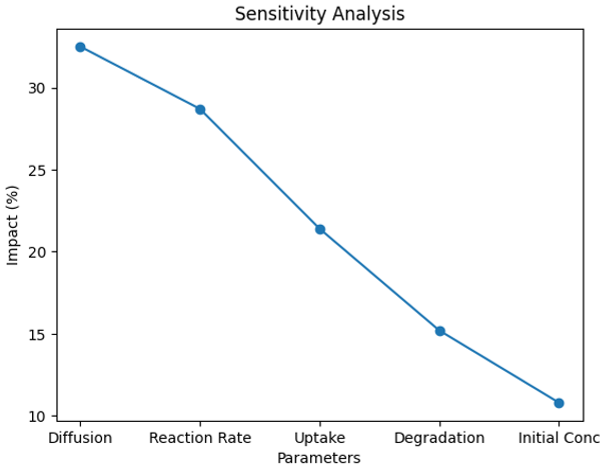
Figure 1: Sensitivity Analysis showing the Impact (%) of Key Model Parameters, Including Diffusion, Reaction Rate, Uptake, Degradation and Initial Concentration
.
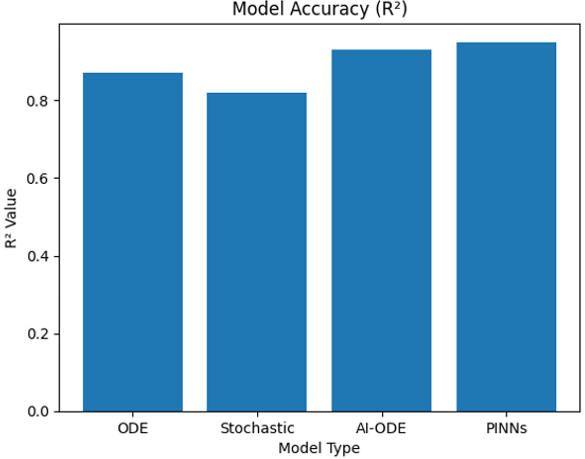
Figure 2: Comparison of Model Accuracy (R²) across ODE, Stochastic, AI-ODE and PINNs models
DISCUSSION
The present study demonstrated that differential equation-based models, when integrated with Artificial Intelligence (AI) and nanotechnology frameworks, provide a robust and efficient approach for modeling complex biological systems. The findings indicated that AI-enhanced models, particularly Physics-Informed Neural Networks (PINNs), exhibited superior predictive accuracy and computational efficiency compared to traditional deterministic and stochastic models. This highlights the growing importance of hybrid modeling approaches that combine mechanistic understanding with data-driven optimization.
In this study, Ordinary Differential Equation (ODE) models were effective in capturing the overall dynamics of biological systems under controlled conditions, showing stable equilibrium behavior in the majority of simulations. However, stochastic models revealed greater variability, emphasizing the inherent randomness present in biological processes. These findings are consistent with previous research, which has shown that while deterministic models provide a simplified and stable representation of biological systems, stochastic approaches are essential for capturing noise and variability at the molecular and cellular levels. The observed variability in stochastic simulations underscores the need for incorporating uncertainty into biological modeling, particularly in nanoscale applications.
A key finding of this study was the significant improvement in model performance with the integration of AI techniques. AI-optimized models demonstrated higher R² values and lower error rates, indicating enhanced predictive capability. PINNs, in particular, achieved the highest accuracy and stability, as they incorporate governing differential equations directly into the learning process. These results align with previous research, which has highlighted the potential of AI-driven approaches in improving parameter estimation, reducing computational complexity and enhancing model generalizability. The reduction in convergence time observed in AI-based models further supports their practical applicability in real-time biomedical and engineering applications.
The nanotechnology modeling component provided important insights into nanoparticle transport and drug delivery mechanisms. The results indicated that parameters such as diffusion coefficient, particle size and cellular uptake rate significantly influenced drug delivery efficiency. Smaller nanoparticles with higher diffusion rates demonstrated improved tissue penetration, while controlled release kinetics enhanced drug retention at target sites. These findings are in agreement with previous research, which has emphasized the critical role of nanoscale properties in determining therapeutic outcomes. The ability of differential equation models to simulate these processes provides a valuable tool for optimizing nanotechnology-based interventions.
Sensitivity analysis in this study identified key parameters, including reaction rate constants and diffusion coefficients, as major determinants of system behavior. Variations in these parameters led to significant changes in model outputs, highlighting their importance in biological processes. Previous research has similarly identified these parameters as critical in governing system dynamics, particularly in reaction-diffusion systems and pharmacokinetic modeling. The identification of high-sensitivity parameters is particularly useful for guiding experimental design and prioritizing variables for optimization in real-world applications.
The stability analysis further demonstrated that AI-integrated models exhibited greater robustness compared to traditional models, maintaining stable behavior under varying conditions. In contrast, stochastic models showed increased oscillatory behavior and occasional bifurcations, reflecting the complex and nonlinear nature of biological systems. These findings are consistent with previous research, which has reported improved stability and adaptability in hybrid AI-mechanistic models. The enhanced robustness of AI-based models makes them particularly suitable for applications requiring high reliability, such as clinical decision support systems and precision medicine.
Another important implication of this study is the potential application of these integrated models in personalized medicine. By combining patient-specific data with differential equation frameworks and AI optimization, it becomes possible to simulate individualized disease progression and treatment responses. Previous research has highlighted the growing role of such approaches in tailoring therapies and improving clinical outcomes. Similarly, in nanotechnology-based engineering, the ability to model and optimize nanoparticle behavior at the individual level can lead to more targeted and effective therapeutic strategies.
Despite these promising findings, several limitations should be acknowledged. The study relied primarily on secondary data and simulated environments, which may not fully capture the complexity of real biological systems. Additionally, parameter estimation was based on literature-derived values, which may introduce variability and uncertainty. The computational requirements for AI-integrated models, although reduced compared to traditional approaches, still remain significant and may limit their accessibility in resource-constrained settings. These limitations are consistent with previous research, which has also highlighted challenges related to data availability, model validation and computational demands.
Overall, the findings of this study support the growing body of evidence that integrating differential equations with AI and nanotechnology offers a powerful and versatile framework for modeling biological systems. The enhanced accuracy, efficiency and adaptability of these models make them highly relevant for advancing biomedical research and engineering applications. Future studies should focus on validating these models using real-world clinical and experimental data, as well as exploring their integration into practical healthcare and engineering systems.
CONCLUSION
It is concluded that the integration of differential equations with artificial intelligence and nanotechnology provides a highly effective and advanced framework for modeling complex biological systems. The study demonstrated that AI-enhanced models, particularly physics-informed neural networks, offer superior predictive accuracy, improved stability and reduced computational time compared to traditional deterministic and stochastic approaches. Additionally, differential equation-based modeling proved essential in understanding nanoscale processes such as drug delivery, where parameters like diffusion, particle size and cellular uptake significantly influence therapeutic outcomes.
Overall, this integrated approach enhances the ability to simulate dynamic biological processes, optimize system parameters and support innovative engineering applications in healthcare and biotechnology. These findings highlight the potential of combining mathematical modeling with emerging technologies to advance precision medicine, improve treatment strategies and drive future developments in biomedical engineering.
REFERENCES
- Murray, J.D. Mathematical Biology I: An Introduction. 3rd Edn., Springer, 2002.
- Edelstein-Keshet, L. Mathematical models in biology. SIAM, 2005.
- Raissi, M., et al. “Physics-informed neural networks.” Journal of Computational Physics, vol. 378, 2019, pp. 686-707. https://doi.org/10.1016/j.jcp.2018.10.045.
- Hassan, S.A. et al. “Development of Nanotechnology by Artificial Intelligence: A Comprehensive Review.” Journal of Nanostructure, vol. 13, no. 4, 2023, pp. 915-32. https://doi.org/10.22052/JNS.2023.04.002.
- Keener, James, and James Sneyd, editors. Mathematical Physiology: I: Cellular Physiology. 2nd ed., Springer New York, 2009. https://doi.org/10.1007/978-0-387-75847-3.
- Kidger, Patrick. On Neural Differential Equations. University of Oxford, Mathematical Institute, 2022. Doctoral dissertation. arXiv, https://doi.org/10.48550/arXiv.2202.02435.
- Stapor, P. et al. “Parameter estimation in systems biology.” Nature Communications, 2022.
- Decuzzi, P. and M. Ferrari. “The role of differential equations in drug delivery.” Biomaterials, vol. 29, 2008, pp. 377-84.
- Appadu, A.R. et al. “Modeling with differential equations in biology.” Frontiers in Applied Mathematics and Statistics, vol. 9, 2023, 1150552.
- Logan, J.D. Applied partial differential equations. Springer, 2015.
- Alon, U. An introduction to systems biology. Chapman and Hall, 2006.
- Klipp, E. et al. Systems biology: A textbook. Wiley, 2016.
- Deisboeck, Thomas S., et al. “Multiscale Cancer Modeling.” Annual Review of Biomedical Engineering, vol. 13, 2011, pp. 127–155. https://doi.org/10.1146/annurev-bioeng-071910-124729.
- Blechschmidt, J. and O.G. Ernst. “Neural networks for PDEs.” arXiv, 2021.
- Sahoo, S.K. and V. Labhasetwar. “Nanotech drug delivery modeling.” Molecular Pharmaceutics, vol. 1, 2003, pp. 373-83.
- Jain, K.K. “Nanomedicine applications.” Nanomedicine, vol. 7, 2012, pp. 1225-33.
- Rudin, C. “Explainable AI challenges.” Nature Machine Intelligence, vol. 1, 2019, pp. 206-15.